


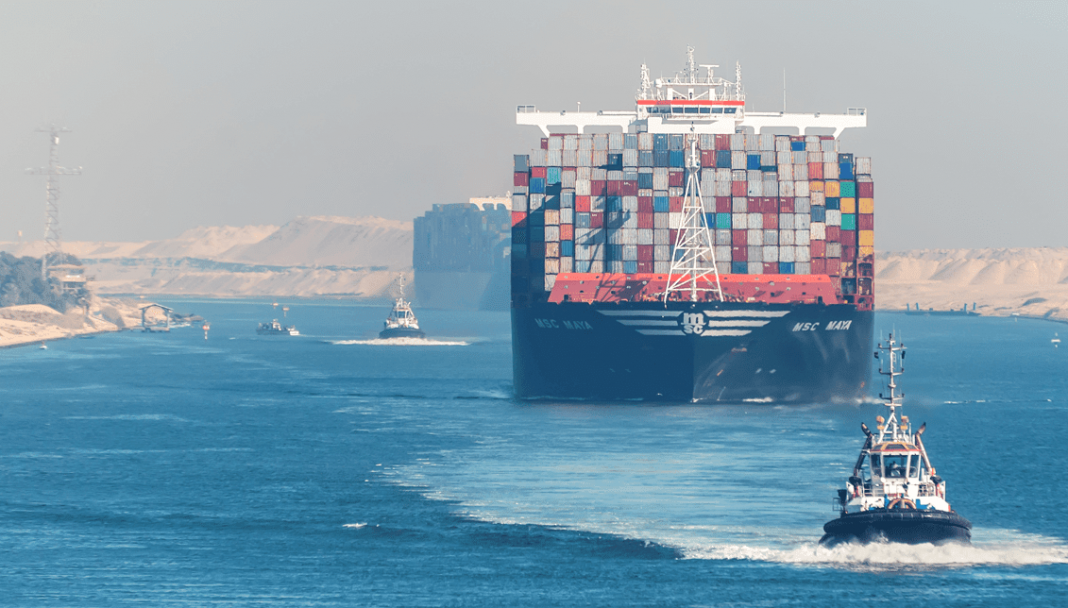
The latest Drewry World Container Index (WCI) reveals a complex landscape for global shipping, with the composite index declining for the second consecutive week.
Despite geopolitical volatility and rising operational costs, the index fell 1% to $2,232 per 40ft container, primarily weighed down by softening rates on Asia–Europe lanes.
Defying the overall downward trend, the Transatlantic trade route experienced a significant 15% spike, bringing rates to $2,326 per 40ft container. This sharp increase is attributed to:
-
Capacity Reductions: Carriers have tightened supply to bolster pricing.
-
Peak Season Surcharges (PSS): The implementation of a $1,100 surcharge per 40ft container, effective April 15, has significantly impacted the lane.
While tensions in the Middle East and disruptions in the Strait of Hormuz continue, they have not been enough to sustain rate hikes in the Asia–Europe corridor. A combination of seasonal lulls and excess capacity led to notable declines:
-
Shanghai to Genoa: Dropped 8% to $3,071.
-
Shanghai to Rotterdam: Decreased 4% to $2,147.
Data from Drewry’s Container Capacity Insight suggests that carriers are not aggressively cutting capacity in this region, with only three blank sailings scheduled for the coming week.
On the Transpacific route, carriers have been more proactive. By announcing nine blank sailings for the upcoming week, they managed to push rates from Shanghai to Los Angeles up 4% ($2,934). Meanwhile, Shanghai to New York rates held steady at $3,562.
Regarding operational costs, the report notes: “Although bunker fuel prices remain elevated compared to pre-conflict levels, they have eased from recent highs. These cost pressures are currently insufficient to offset the broader downward pressure on freight rates driven by weak global demand.”
Drewry anticipates that freight rates will remain relatively stable with low volatility in the immediate week ahead. While geopolitical risks in the Strait of Hormuz continue to constrain vessel movement, the market remains largely driven by the balance of carrier capacity management versus seasonal demand softness.

