


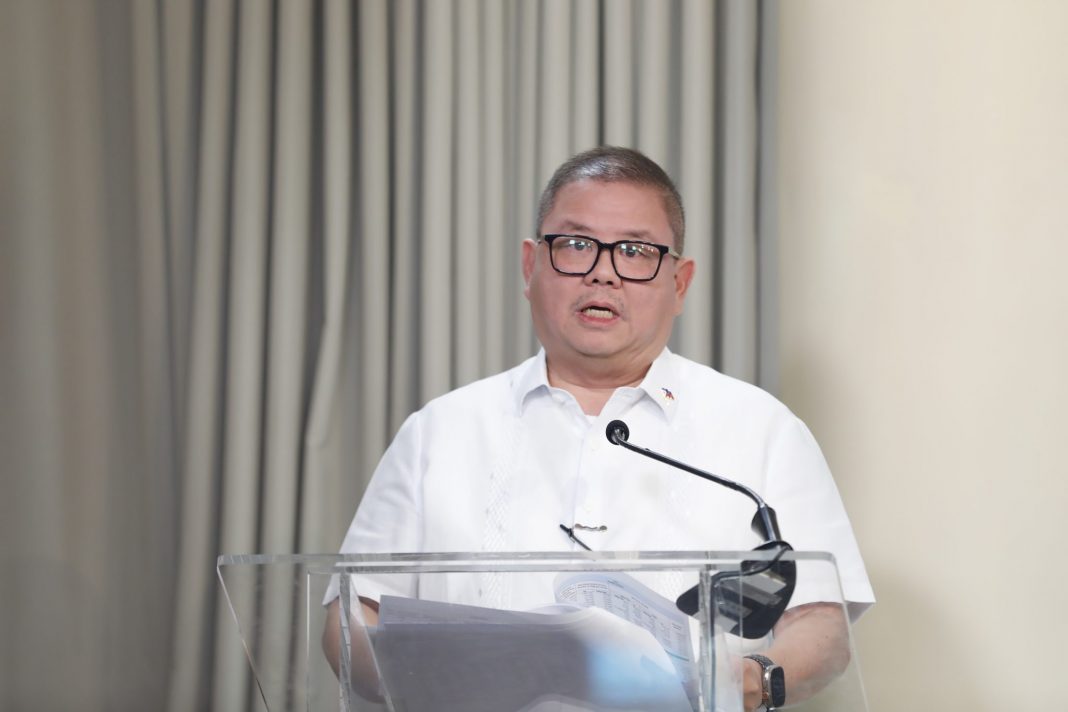
Agriculture Secretary Francisco P. Tiu Laurel Jr. has warned that global agriculture is facing an unusually severe convergence of risks, as climate change, geopolitical tensions, and recurring disease outbreaks reshape food systems and strain government capacity to respond.
Speaking at a post-ministerial workshop on Friday, April 24 in Pasay City following the 14th World Trade Organization Ministerial Conference, Tiu Laurel said the job of agriculture secretary has become significantly more difficult amid overlapping crises affecting production and trade.
“I guess we started in a negative note. In a sense, we are in the wild, wild west at this moment,” he said. “I think it’s also the worst time to be the secretary of agriculture.”
He pointed to increasingly unstable weather patterns driven by climate change, including repeated El Niño and La Niña cycles, which have disrupted planting and harvest schedules. These climate shocks are compounded by persistent animal diseases such as African swine fever and bird flu, which continue to affect livestock supply and prices.
Tiu Laurel also cited geopolitical disruptions, including the Ukraine war and pandemic aftershocks, which have contributed to supply chain instability and periodic export restrictions across key commodities. He said these factors are no longer isolated events but part of a broader pattern of global volatility.
From his perspective as a former businessman, he said this level of uncertainty is not entirely new, but the intensity and frequency of shocks have escalated.
“As a businessman before, this is kind of normal,” he said. “Sometimes exports are cut, there is ASF here, bird flu there, supply chains are disrupted. So I kind of see this as normal, but a little bit extreme this time.”
Tiu Laurel said governments must respond with greater agility and a more commercially minded approach to managing risk. For the Philippines, he identified persistent weaknesses in production efficiency as the biggest challenge, particularly high costs driven by infrastructure and logistics gaps.
“What we have to tackle is the low cost of producing products, which would involve infrastructure and logistics,” he said.
He added that while the country performs relatively better in product quality and marketing, cost competitiveness remains the key constraint in strengthening both domestic supply stability and export potential.
Despite mounting pressures, Tiu Laurel underscored the continued importance of global coordination, saying the World Trade Organization remains a critical venue for dialogue amid fragmented and uncertain global trade conditions.
“As a venue alone, it is already important,” he said. “A place where people can talk and meet always helps, especially in situations like this.”
His remarks highlight the growing complexity facing agriculture policymakers, where climate volatility, health risks, and geopolitical shocks are increasingly intertwined, forcing governments to rethink traditional approaches to food security and trade resilience.

