


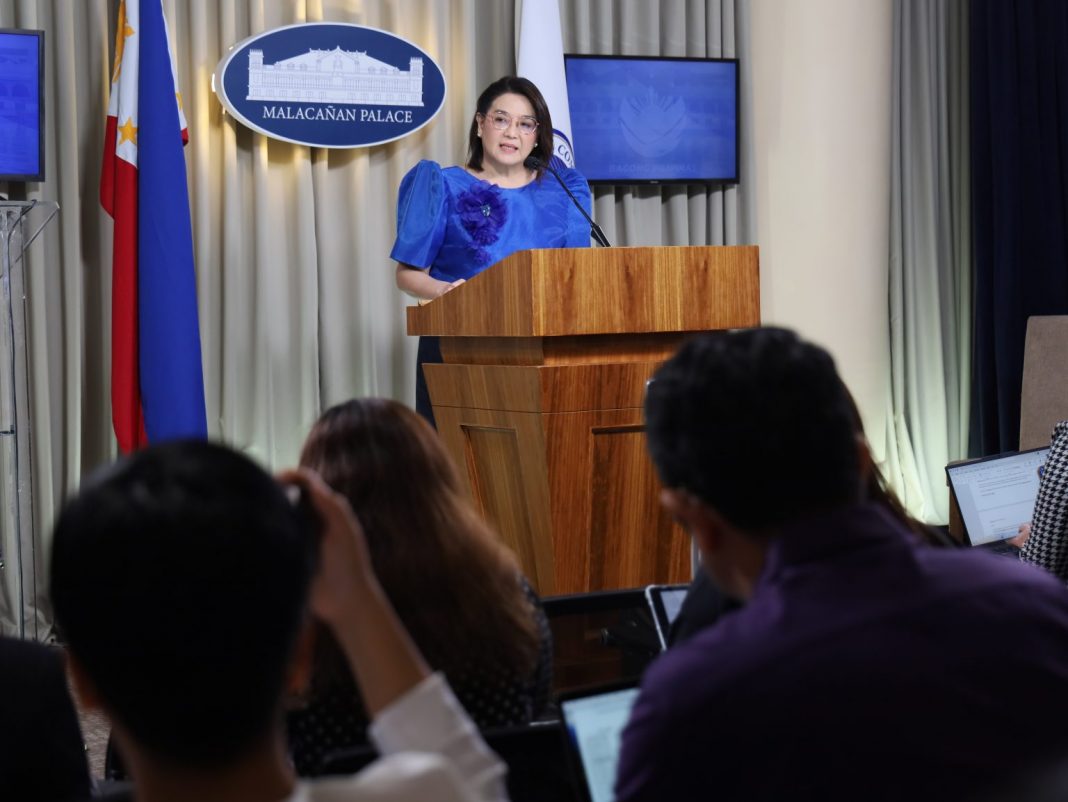
Malacañang on Tuesday reaffirmed its full preparedness to host the 48th Association of Southeast Asian Nations (ASEAN) Summit and Related Meetings, assuring a seamless, secure, and world-class event.
During a Palace press briefing, Presidential Communications Office Undersecretary and Palace Press Officer Claire Castro announced that preparations are in their final phase, with all systems currently undergoing live testing and synchronization.
“The National Organizing Council is now in the final phase of preparations for the Philippine hosting of the 48th ASEAN Summit and Related Meetings. All strategic, operational, logistical, technical, and security arrangements are complete, and systems are undergoing final live testing and synchronization,” Castro said.
She emphasized that the government, through the National Organizing Council (NOC) and all participating agencies, is “100 percent ready” to deliver a secure and successful summit.
In light of the ongoing global energy challenges linked to tensions in the Middle East, the government has implemented contingency measures to ensure uninterrupted proceedings. These include the use of a Virtual Meeting Room System (VMRS), an innovative platform pioneered in Manila to facilitate efficient coordination among ASEAN member states.
Out of the 683 ASEAN-related meetings scheduled:
- 174 are set to be conducted face-to-face,
- 173 will utilize the VMRS platform,
- 73 in-person meetings and 30 virtual sessions have already been completed,
- Approximately 580 additional meetings are expected in the coming weeks.
The VMRS is designed to ensure continuity and flexibility, allowing discussions and decision-making processes to proceed smoothly despite external challenges.
The summit is expected to bring together the three pillars of the ASEAN Community:
- ASEAN Political-Security Community (APSC),
- ASEAN Economic Community (AEC),
- ASEAN Socio-Cultural Community (ASCC).
Among the central topics for discussion are regional energy security and a coordinated ASEAN response to the broader impacts of geopolitical tensions in the Middle East.
Malacañang underscored its commitment to hosting a summit that not only reflects the Philippines’ organizational capability but also strengthens regional cooperation and resilience.

