


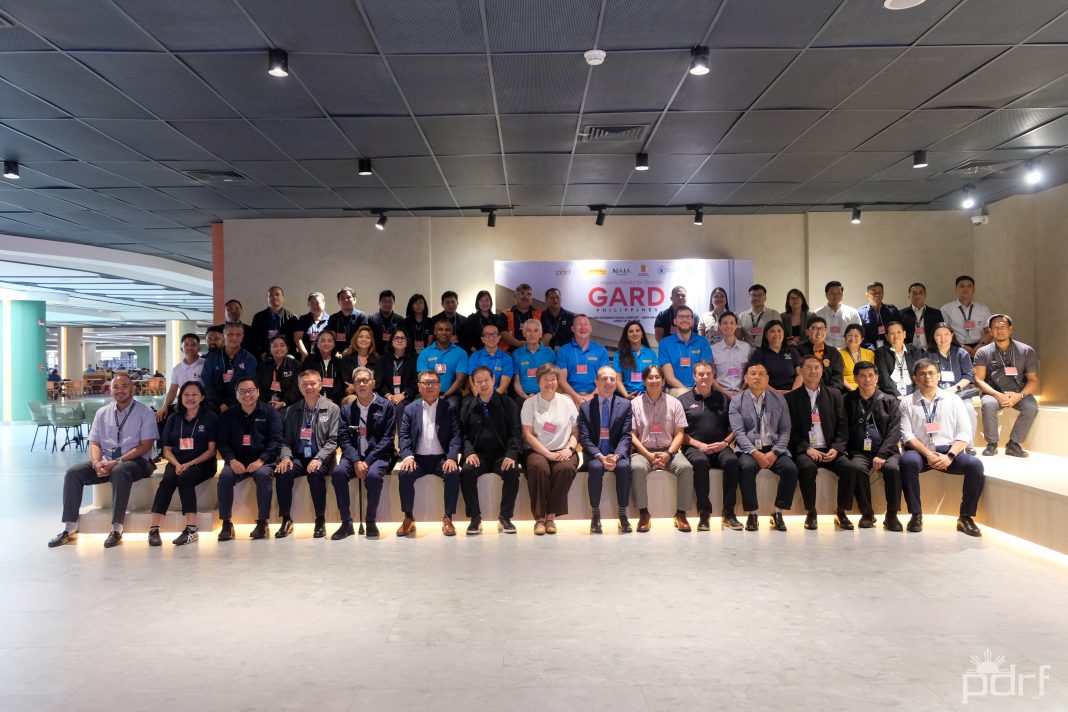
New NAIA Infrastructure Corp (NNIC) conducted the second Get Airports Ready for Disaster (GARD Workshop) for the Ninoy Aquino International Airport (NAIA), with the cooperation of lead coordinator United Nations Development Programme (UNDP), lead trainer DHL Group and in-country advocate Philippine Disaster Resilience Foundation (PDRF), from 14 to 16 April 2026.
The GARD Program is a global public-private partnership between UNDP and DHL Group aimed at supporting airports in planning for their role as logistical hubs in the event of disasters such as floods, earthquakes, fires, and landslides, as well as integrating the airports’ role in national disaster preparedness and response planning.
This was the fourth airport to complete the GARD Program in the Philippines, with the other airports being Clark International Airport (2022), Mactan-Cebu International Airport (2014 and 2024), and Laguindingan Airport (2023). NAIA was also the first airport in the country to undergo the GARD Program when it was first launched in 2013.
“Our responsibility is to make sure NAIA performs well in normal operations and is ready when the country needs it most,” said NNIC Chief Operating Officer Ok Chul Shin. “In a disaster, the airport becomes a critical link for moving relief goods, equipment, rescue teams and other urgent support. This workshop helps us review our facilities and processes against that responsibility.”
“GARD demonstrates the power of global public private partnerships, where governments, businesses, and communities combine expertise to turn airports into vital connectors in times of crisis. Strengthening NAIA’s preparedness means strengthening the Philippines’ ability to deliver help when it matters most,” said Ioana Creitaru, GARD Global Manager for UNDP.
More than 40 participants from different units at NAIA as well as government agencies and non-governmental organizations participated in the workshop. During the workshop, participants were introduced to the GARD methodology, learning how to identify and address bottlenecks in airport logistics during disasters, assess airport surge capacity, and develop an action plan to mitigate potential constraints.
As part of the workshop, participants conducted an extensive site visit across various airport facilities, identifying potential aircraft parking areas and locations for staging and storing relief supplies, while considering NAIA’s planned future developments.
“Our grand vision is not to stop at four airports. With the help of DHL Group and UNDP, we are keen to train local trainers on the GARD methodology, so we can also run GARD workshops across all the other smaller airports in the country. Our communities are dependent on these smaller airports to bring goods and people in and out of the islands in times of disasters,” said PDRF Chief Resilience Officer Guillermo Luz.
The Philippines has long been a lighthouse for the GARD Program in the region, with the series of six workshops nationwide to better prepare airports to handle the surge in humanitarian aid and rescue teams. NAIA is undergoing a significant transformation, with new management, ambitious growth plans, and major developments ahead, including Terminal 4 this year and Terminal 5 in the coming years. As the airport grows, its importance during crises grows as well, making this workshop especially timely,” said Yvonne Lee, Managing Director, Philippines, DHL Global Forwarding.
Established in 2009, GARD aims to echo the demand for airport preparedness and response capacity of transportation hubs in the event of disasters. Rolled out in 70 airports across 31 countries, the Program includes training personnel to handle the influx of goods and people during calamities, assisting local authorities with relief operations, and assessing the current state of the affected airports. The successful implementation of GARD at NAIA in the Philippines marks another important step in strengthening airport resilience in times of crisis.

