


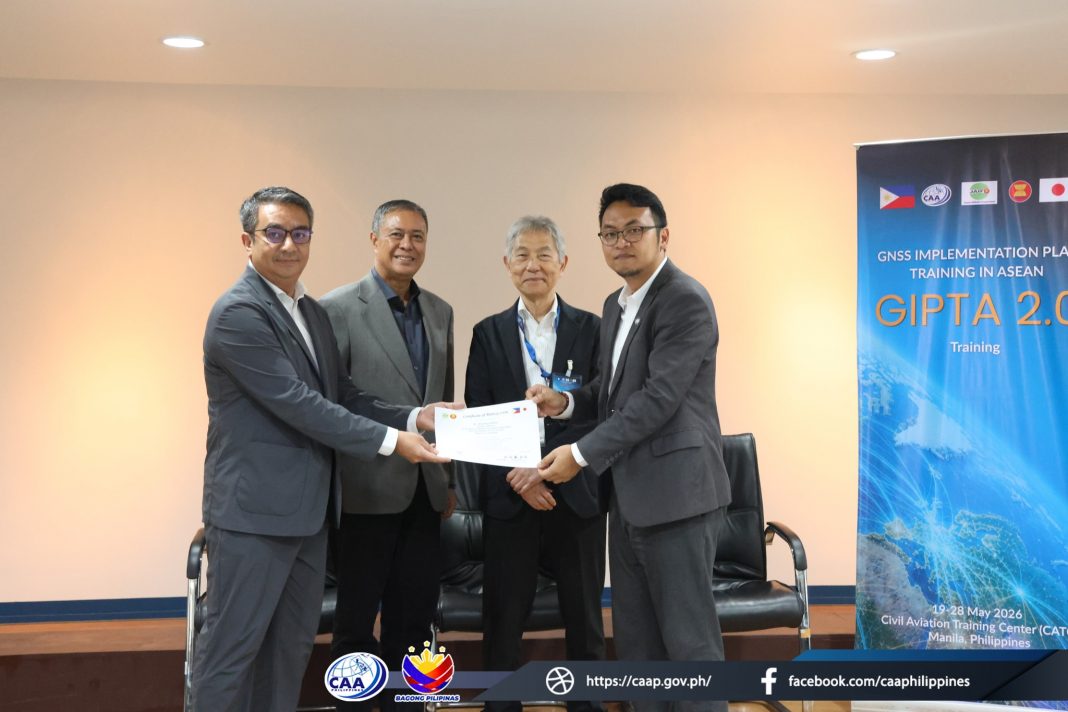
The Civil Aviation Authority of the Philippines (CAAP) successfully hosted the GNSS Implementation Plan Training in ASEAN (GIPTA 2.0) from May 19 to 28, 2026, at the Civil Aviation Training Center (CATC) in Pasay City.
Supported by the Japan-ASEAN Integration Fund (JAIF), the intensive ten-day program gathered aviation representatives from across ASEAN Member States. The initiative aimed to elevate the region’s collective expertise and technical skills in modern, satellite-based navigation systems.
The GIPTA 2.0 curriculum focused heavily on Global Navigation Satellite Systems (GNSS) and Satellite-Based Augmentation Systems (SBAS). These technologies are crucial to the future of global air navigation, offering a framework to enhance flight safety, optimize operational efficiency, and expand airspace capacity to meet rapidly growing regional air traffic demands.
A major milestone of the training was strengthening cross-border cooperation. ASEAN delegates collaborated on strategies for testing and refining navigation systems, focusing on region-specific technical hurdles. Participants addressed critical operational challenges unique to Southeast Asia, including radio frequency interference and ionospheric delays that can disrupt satellite signals near the equator.
“Our region faces unique operational and technical challenges, and this training has shown us that no challenge is too great when ASEAN nations stand united, collaborate openly, and learn from one another,” said CAAP Director General Retired Lt. Gen. Raul Del Rosario.
By successfully spearheading GIPTA 2.0, CAAP reaffirms its commitment to upholding the strict international aviation standards set by the International Civil Aviation Organization (ICAO). The initiative aligns with the strategic directives of Philippine President Ferdinand Marcos Jr. and Transportation Secretary Giovanni Lopez to continuously upskill future aviation professionals and solidify the nation’s role as a proactive leader in regional aviation safety.

