


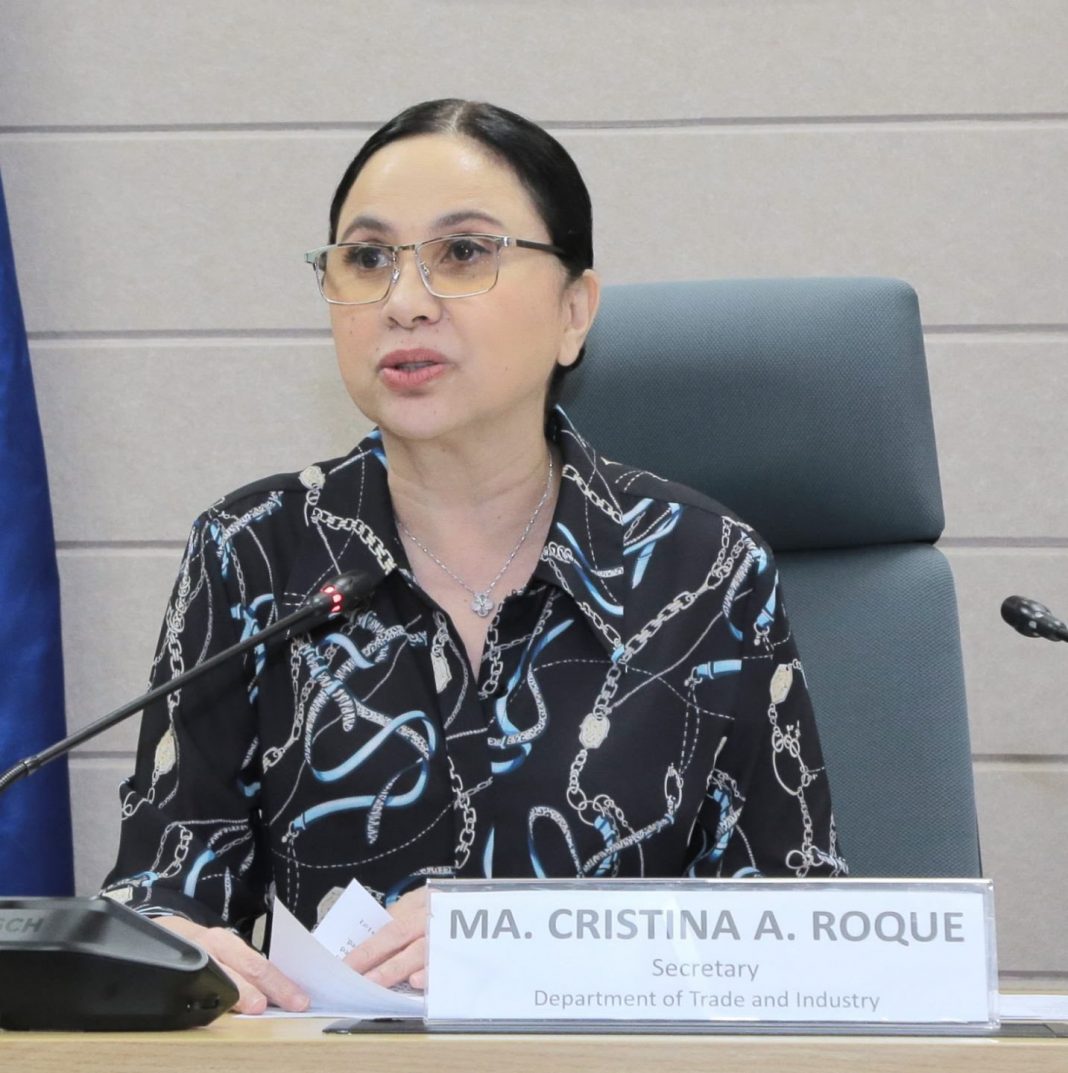
Despite the prolonged political wrangling, the business community remains largely unfazed and continues to adopt a “business as usual” mindset, according to Trade and Industry Secretary Cristina A. Roque.
“We still move, it’s just to move forward,” said the DTI chief, noting that political concerns have not been raised in her discussions with business leaders.
Roque said the last time she met with business leaders was during President Marcos Jr.’s recent state visit to Japan.
According to Roque, business executives have not raised political issues with her and remain focused on pursuing business opportunities.
Meanwhile, manufacturers urged a quick return to legislative focus following the chaos at the Senate leadership changes.
“Political realignments happen. What businesses need is continuity in economic policy,” said Elizabeth H. Lee, chairperson of the Federation of Philippine Industries (FPI). “Clear priorities on energy, logistics, and competitiveness will reassure both local industry and foreign investors.”
FPI emphasized that the Philippines remains a strong investment destination if reforms stay on track.
“We have the fundamentals and the talent. With stability and steady execution, we can turn today’s challenges into tomorrow’s momentum. But we need to get our act together as a country and stay focused on the path forward to prevent conditions from worsening. The opportunity is still within reach — we just need to move with clarity, discipline, and urgency,” Lee said.
Other business and governance groups warned that what could have been a strong start in holding leaders and government officials accountable risks losing momentum, leaving key reforms unfinished and anti-corruption efforts stalled.
In a joint statement, the Management Association of the Philippines (MAP), Justice Reform Initiative, Institute for Solidarity in Asia, and Institute of Corporate Directors said that while several individuals have been publicly identified in ongoing investigations, they have yet to be brought before Philippine courts, and many reforms needed to prevent similar abuses remain incomplete.
The groups stressed that the challenge is not only to prosecute past wrongdoing but also to address the conditions that allowed such abuses to occur in the first place.
“Yet accountability remains incomplete,” the statement said, noting that several individuals publicly identified in ongoing investigations have yet to be brought before Philippine courts, while many reforms needed to prevent similar abuses remain unfinished.
The groups added that of the four reform initiatives they proposed in December 2025, meaningful progress has been achieved only in beneficial ownership disclosure through the Securities and Exchange Commission’s Beneficial Ownership Disclosure Rules and the HARBOR registry.

