


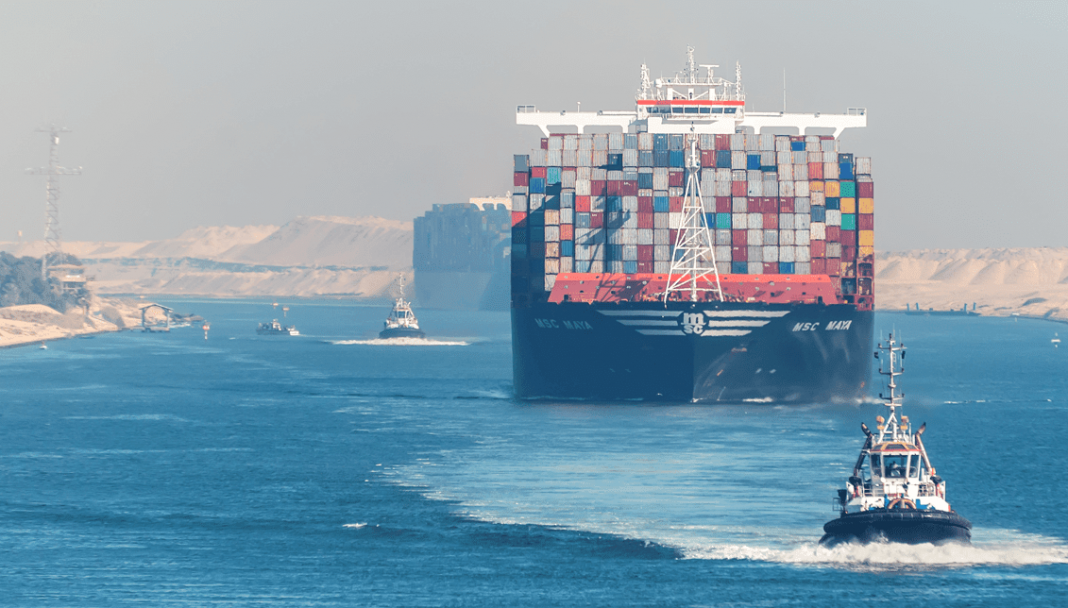
The intra-Asia container freight market remains highly resilient, driven by an unseasonably early peak season demand surge, tight capacity, and escalating port congestion across the region.
Despite a minor one percent softening in the overall Drewry Intra-Asia Container Index (IACI) to USD1,100 per 40ft container—dragged down primarily by rate dips in the Middle East and Singapore—freight rates across other major intra-Asian corridors continue to display significant strength.
Concerns over rising operational costs and potential supply chain bottlenecks have prompted cargo owners to front-load shipments of Christmas goods months ahead of schedule. This early peak season has triggered an influx of semi-finished goods and components moving across Asia, particularly on corridors linking China and Southeast Asia.
While spot rates on lanes connecting China to South and Southeast Asia experienced slight contractions this week—with Shanghai to Kaohsiung dropping 4 percent to USD1,560 and Shanghai to Laem Chabang slipping 3 percent to USD1,237 per 40ft container—the baseline remains robust.
Conversely, routes originating from Southeast Asia held perfectly steady; rates from Laem Chabang to Shanghai and Ho Chi Minh City to Shanghai remained stable at $232 and $65 per 40ft container, respectively.
Port utilization at major transhipment hubs, notably Singapore, has reached critical levels. Large volumes of displaced containers are actively disrupting network flows and restricting the critical repositioning of empty equipment into hungry South Asian markets.
To combat severe congestion at key gateways like Nhava Sheva and maintain service reliability in a tight, volatile environment, ocean carriers are aggressively restructuring their networks. Notably, TS Lines is set to launch a new Far East–Malaysia-West India service (CWX2) on June 12. Partnering in a revamped joint loop with Emirates Shipping Line (ESL), Evergreen, and KMTC, the six-week rotation will deploy six vessels ranging from 5,500 to 9,500 TEU to stabilize capacity on these strained lanes.
Beyond localized congestion, the broader market sentiment continues to feel the weight of geopolitical tensions in the Middle East. Ongoing friction is applying steady upward pressure on freight rates via inflated bunker fuel costs and fuel surcharges.
These logistics headwinds are directly bleeding into upstream manufacturing. China’s PMI Prices of Purchased Materials Index has remained heavily elevated since the conflict began and currently sits at a high of 60.5 points, signaling a sharp rise in raw material procurement costs for regional manufacturers.
Looking ahead, Drewry expects intra-Asia freight rates to reverse their minor dip and climb in the coming weeks as strong cargo demand intersects with persistent, unresolved port congestion.

