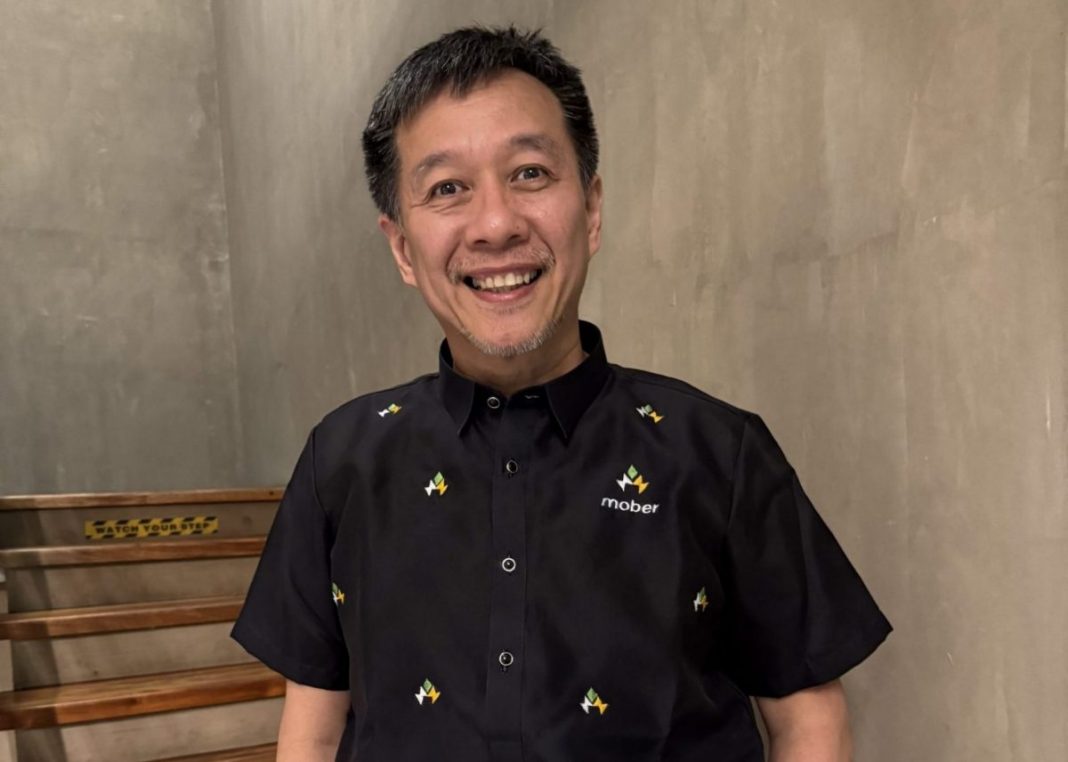
Long before green mobility became fashionable, DENNIS NG was already pioneering a bold vision: building the country’s first all-electric vehicle logistics company.
Mober started in 2015 as a technology-enabled delivery platform. Back then, the goal was simple: solve logistics inefficiencies through technology.
In 2021, its largest client, IKEA, challenged the company to provide electric vehicle (EV) deliveries.
“We took a leap of faith and invested in EVs. What started as a customer requirement eventually became our mission,” he said. Mober became the country’s pioneer in EV logistics.
What began as an effort to help solve the Philippines’ logistics challenges has evolved into a business model that continues to redefine the industry.
Beyond proving that heavy-goods delivery can move beyond traditional internal combustion engine trucks, Dennis is also challenging conventional thinking about logistics itself.
For him, the industry is not simply about vehicles and technology—it is ultimately about empowering the people who keep supply chains moving–correcting the long-held belief that heavy-goods delivery belongs exclusively to traditional internal combustion engine trucks.
What followed was the support of at least 10 blue-chip clients that embraced his vision of green mobility, beyond simply addressing inefficiencies in the logistics sector.
Dennis invested in mega electric charging hubs and established 60 charging points within Mober’s facilities and those of its clients. He continues to expand Mober’s charging infrastructure to strengthen the company’s EV ecosystem.
He also invested in a proprietary Battery Management System (BMS) to monitor battery efficiency, particularly important because the battery is the most expensive component of an EV. While expansion plans remain carefully measured, Dennis also decided to expand into Bangkok to support IKEA’s operations there.
“Today, Mober is no longer just a logistics company. We are building the infrastructure, charging network, technology platforms, and workforce ecosystem needed to accelerate the transition to electric logistics in the Philippines and beyond,” Dennis said.

Growth
Today, Mober operates 130 EV vans, 70 of which are financed by BDO Unibank. The company has also acquired one electric tractor-head truck, with 10 more expected to arrive within the year as it expands into cargo logistics. This makes Mober the first company in the industry to deploy electric-powered heavy trucks.
“When I started Mober, I bootstrapped the business. We were very asset-light in the early days and focused primarily on building the platform, acquiring customers, and proving the business model,” he said.
Venture capitalists have started to notice Mober. Dennis has secured USD11 million in funding from angel investors, including RT Holdings and SEACEF I and II, who share his vision of accelerating sustainable logistics across Southeast Asia.
“More investors and financial institutions are beginning to recognize that sustainability is not just an environmental issue—it’s a business opportunity,” he said.
Many banks in the Philippines, however, remain understandably cautious about financing EVs because of the limited historical data available, particularly in the commercial vehicle sector. But once the residual value of EVs becomes more established, he said, more financial institutions will expand into commercial EV financing.
Container delivery
Dennis sees enormous opportunities ahead, particularly in heavy transport and long-haul logistics.
As a result, Mober is scaling up by investing heavily into larger electric vehicles, including electric tractor heads. He already acquired one tractor and is expected to bring in 10 tractor heads this year. This means going into container delivery.
Dennis believes that if he could convince financial backers to support his fleet of EV delivery vans, they would likely support his efforts to scale operations into the heavy commercial vehicle segment.
As the country’s pioneer in green logistics, the startup has attracted increasing support from financial backers as its capital requirements have grown significantly. The company continues to invest in charging infrastructure, technology, battery management systems, and talent.
“More important than valuation, however, is the value we continue to create. We are building infrastructure and capabilities that we believe will serve the region for decades to come,” he said.
“Our goal is not just geographic expansion. It’s scale. We want to build the largest and most efficient electric logistics platform in Southeast Asia,” he said.
Five years from now, Dennis envisions Mober operating thousands of electric commercial vehicles across Southeast Asia, not hundreds, thousands. “I see a network of charging hubs, battery intelligence systems, logistics software, and highly trained Green Warriors supporting some of the largest brands in the region,” he said.
People
One of the biggest misconceptions about the logistics industry, according to Dennis, is that people focus primarily on the trucks. In his EV logistics business model, people see charging infrastructure, or technology.
“Many people see the trucks. Some see the chargers. Others see the technology. But at the end of the day, our business is really about drivers. Our business is people,” he said.
Dennis is particularly passionate about the people who run the organization. “One of our biggest missions today is developing the next generation of professional delivery drivers. We call them Green Warriors,” he said.
He established the Mober Driver’s Academy to build a culture of logistics drivers for EVs. Mober’s Green Warriors even include female drivers, reflecting the company’s commitment to creating opportunities for women in logistics.
“Technology and infrastructure are important, but people will always be our greatest competitive advantage,” he said noting that driver management remains one of the industry’s most persistent challenges.
Logistics drivers are highly skilled professionals who are required to hold Driver’s License Code B2, C, or CE under the Professional Driver’s License classification. The specific license required depends on the Gross Vehicle Weight (GVW) and configuration of the commercial vehicle they operate.
Dennis himself proudly introduces himself as a Mober driver and still occasionally steps in when the company lacks drivers to fulfill deliveries. This hands-on approach reinforces his commitment to developing the next generation of logistics professionals.
Mober now employs approximately 400 people, including drivers and helpers.
“I still spend time on the ground, visit charging hubs, talk to drivers, and occasionally jump into operational discussions because I believe leaders should never lose touch with reality,” he said.
The responsibility of ensuring the company’s long-term sustainability is what keeps him awake at night. As an entrepreneur, Dennis feels accountable for the livelihoods of his employees. This is why he remains focused on growing the company, developing future leaders, and recruiting seasoned logistics executives to strengthen the organization.
Eventually, he will be preparing for his exit. “I’m a countdown entrepreneur,” he said as he prepares for eventual succession and exit. “I need somebody who is swimming in logistics to ensure we are sustainable.”
Succession planning is a key part of his long-term strategy. Dennis believes there will always be managers who are better than him. In time, he hopes to spend more of his energy mentoring future leaders within the organization and helping shape the broader EV ecosystem.
“My job is not just to build a company, it is to help build an industry,” he added.
T-Shirts
Unlike many corporate executives, Dennis embraces practicality and informality throughout the Mober ecosystem. One of his trademarks is wearing Mober-branded T-shirts.
“The simplicity reminds me of where we started. Mober began with very humble beginnings, and the shirt serves as a daily reminder not to lose that entrepreneurial mindset no matter how much the company grows,” said Dennis.
Over time, the T-shirt has become part of his personal brand. He recalls occasions when he was not wearing a Mober shirt and people literally failed to recognize him. For Dennis, the shirt symbolizes both the company’s journey and its identity.
“It keeps me grounded and connected to the company every single day,” he said.
For special occasions, however, he wears a customized barong featuring the Mober logo.
Fears and prayers
An accountant by profession, Dennis has always been fascinated by numbers, systems, and understanding how businesses work. Yet he realized that all of his interests are connected by one common passion: solving problems. That same passion led him into logistics.
The journey evolved naturally through listening to customers, identifying opportunities, and adapting to changing needs.
“Today, we’re helping shape a new industry, but at our core, we’re still focused on solving problems and creating value,” he said.
But entrepreneurship is ultimately an experiment in determining whether a business model or value proposition can withstand the test of time, he said.
That’s why every entrepreneur also thinks about failure, but he cautions against dwelling on it. Instead, he said, entrepreneurs should focus on understanding risks and finding ways to overcome them.
Rather than fearing failure, he spends his nights thinking about whether Mober is building an organization capable of sustaining growth.
“The logistics industry is constantly evolving, and every business model must adapt. What gives me confidence is that we’re solving real problems for real customers. As long as we continue creating value and improving execution, we will remain relevant,” he said.
The questions that occupy his mind are: Can the company develop enough leaders? Can it maintain its culture? Can it continue attracting and retaining exceptional people?
After all, vehicles can be purchased and technology can be developed, but great people are much harder to build.
Still, Dennis believes that as long as Mober continues to innovate, invest in its people, and create value for its customers, opportunities for growth will continue to emerge.
He acknowledges, however, that the journey is not his alone and that a higher power is guiding the way.
A Catholic, Dennis says he continually asks for God’s help and guidance, and that prayer has always been an important part of his life.
Often, he says two simple prayers.
“God, if this is for me, please show me the path. If this is not for me, please show me what you want for me.”
The second is simply: “Thy will be done.”
“As entrepreneurs, we like to think we are in control. But the reality is that many things are beyond our control. Prayer reminds me to stay humble, stay grateful, and trust that there is a bigger plan beyond what I can see today,” Dennis concluded.