


As the global economy accelerates its transition toward clean energy and digital technologies, critical minerals have emerged as the new frontline of international trade, industrial policy, and geopolitical competition.
According to the June 2026 edition of the Global Trade Update published by UN Trade and Development (UNCTAD), governments worldwide are rapidly reshaping trade policies to secure access to materials essential for electric vehicles (EVs), battery storage, renewable energy, semiconductors, and data centers.
The report highlights an unprecedented surge in demand for core commodities. By 2040, global demand for lithium is projected to skyrocket by more than 350%, while demand for graphite is expected to rise by more than 130%.
However, UN Trade and Development warns that the primary challenge lies not just in skyrocketing consumption, but in extreme supply chain concentration.
Critical mineral supply chains remain heavily localized, leaving them highly vulnerable to disruptions.
-
Extraction (2025 Data): The Democratic Republic of the Congo (DRC) accounted for 74% of global cobalt mine production. China produced 78% of the world’s natural graphite, while Australia, Chile, and China collectively controlled over 70% of global lithium output.
-
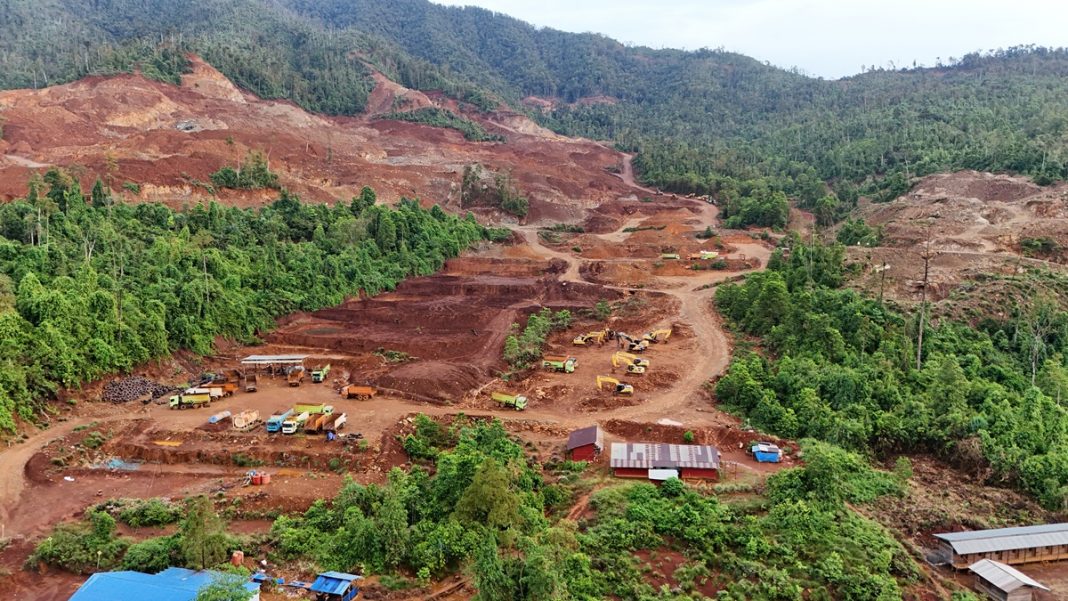
Refining and Processing: The concentration is even more pronounced where economic value is highest. China maintains a dominant global role in refining multiple critical minerals, while Indonesia alone commands 43% of global nickel refining capacity.
This bottleneck poses a severe developmental challenge: mineral-rich developing nations continue to export raw materials while losing higher-value processing, manufacturing, and job creation to industrialized economies.
In response to supply vulnerabilities, governments are aggressively weaponizing trade policy. Since 2020, nearly 100 export-related measures—including licensing requirements, export taxes, and outright export bans—have been introduced on critical minerals. The DRC, China, and Indonesia have emerged as the most active architects of these restrictions.
While producing nations utilize these levers to force domestic processing and boost local revenues, major importing nations are focusing heavily on diversifying supply and reducing geopolitical dependencies.
UN Trade and Development warns that intense competition risks fracturing the global trading system into a web of overlapping agreements and competing standards. This fragmentation threatens to drive up technology costs, complicate long-term investment, and force developing nations to politically align with one trading partner over another.
The report concludes with a vital choice for the international community: will critical minerals become a driver of global economic division, or will they serve as the foundation for a more resilient, inclusive, and affordable green transition? UNCTAD urges a coordinated multilateral approach to keep trade open, predictable, and development-oriented.

