


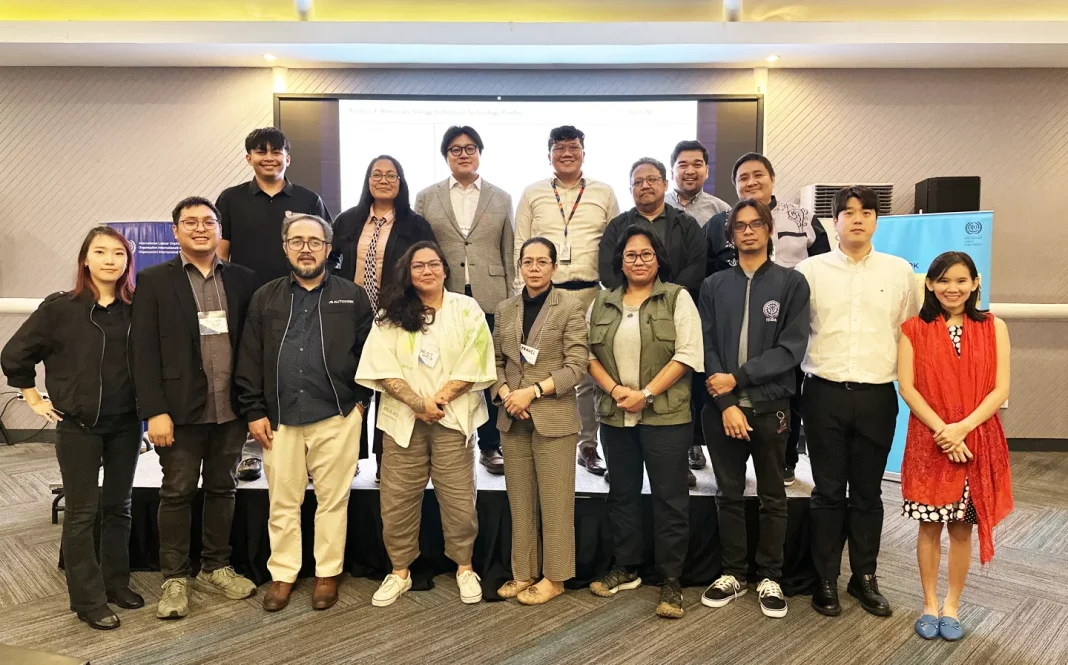
As climate change intensifies and natural disasters threaten communities nationwide, the Philippines is taking decisive action to transform its construction sector. A coalition of international and local experts has launched a landmark initiative to embed fundamental “green skills” into the country’s construction workforce, future-proofing an industry that employs nearly 10 percent of Filipino workers.
To spearhead this transition, experts from construction firms, labor unions, environmental groups, and academia successfully completed a master training program on the Introduction to Green Construction Skills (IGCS) from June 2–5, 2026.
While the construction sector is a primary driver of job creation and a designated strategic sector in the National Green Jobs Human Resource Development (HRD) Plan, a 2025 International Labour Organization (ILO) baseline study revealed a major roadblock: local demand for green construction remains limited. Despite policies like the Philippine Green Building Code, adoption has been slow.
Industry data shows that existing green training programs focus heavily on advanced management and high-level standards, leaving practical, entry-level skills completely missing from technical-vocational education and on-the-job training.
The IGCS curriculum directly addresses this gap by distilling sustainability into practical, universal capacities. Developed in collaboration with experts from Korea Polytechnic University, the course is designed to be adopted as a standard competency across all nationwide construction training programs.
During extensive consultations earlier this year, stakeholders agreed that green skills must emphasize everyday work practices that promote energy and resource efficiency.
“The transition must be worker-centered. All workers, from laborers and skilled workers to equipment operators and supervisors, must have access to training opportunities that improve their access to green jobs,” said Santiago Nolla, Secretary-General of the National Union of Builders and Construction Workers (NUBCW).
Joshua Miguel Lopez, National Project Coordinator of the ILO/Korea Partnership Programme, noted that the training successfully frames sustainability through a culturally relevant, three-pronged approach for Filipino workers:
-
Mahusay (Adept): Masterful execution of green building techniques.
-
Masinop (Thorough/Resourceful): Efficiency in the use of energy and material resources.
-
Ligtas (Safe): Ensuring safe and secure construction for both workers and future building occupants.
The IGCS program trains workers to design and construct buildings that maximize natural elements like wind and sun, reduce energy consumption, and utilize eco-friendly materials suited to the local climate.
“Green construction is a way of rethinking building performance across its full life cycle,” explained Engineer Michael Gayona, Center Coordinator of the Technical Education and Skills Development Authority (TESDA) Green Technology Center. “The challenge now is not only how to teach these concepts, but how to contextualize them within the Philippine construction sector.”
While tailored for construction—covering carbon reduction, passive building design, and renewable energy—industry leaders emphasize that these skills are highly transferable. Engineer Ronaldo Elepano, Jr., Immediate Past President of the Philippine Constructors Association (PCA), noted: “These foundational skills are relevant across a wide range of industries, from construction and engineering to energy, transport, and even business operations.”

