


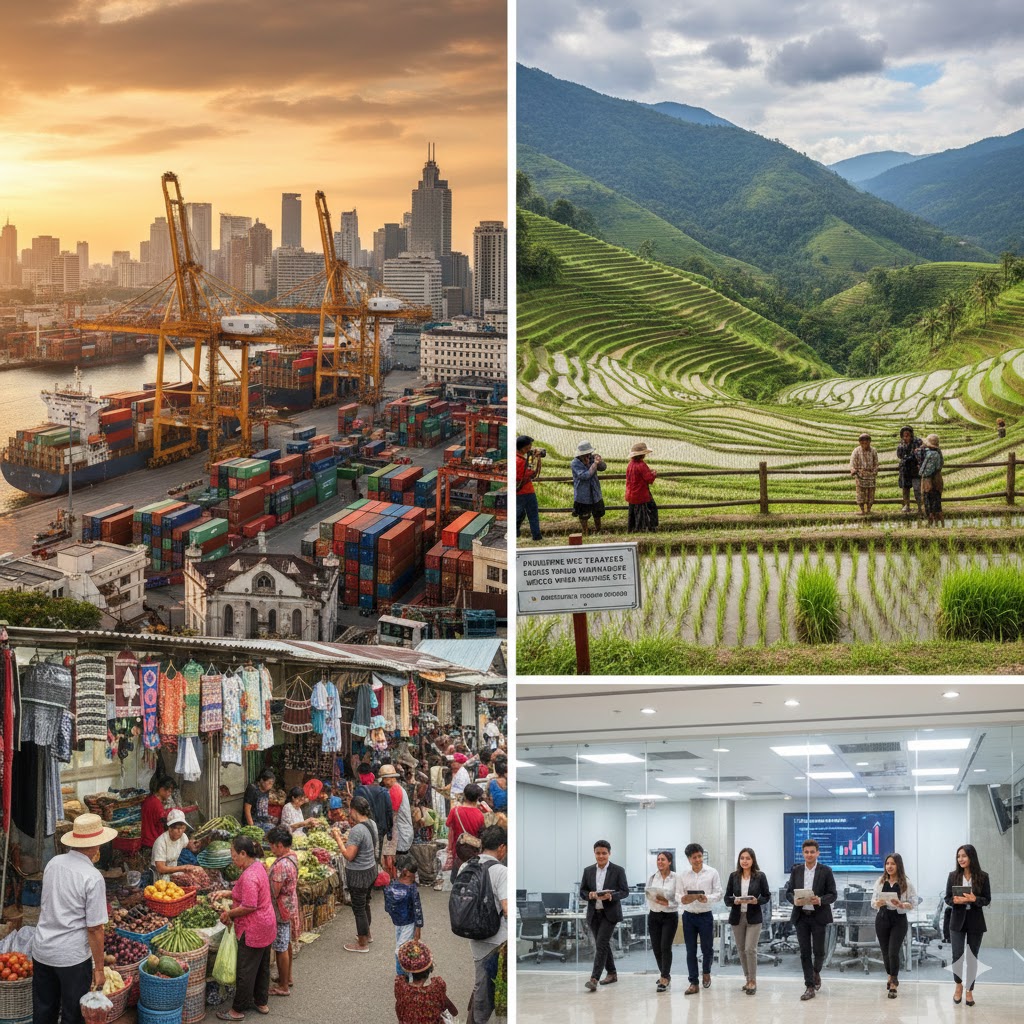
The American Chamber of Commerce of the Philippines (AmCham) and the European Chamber of Commerce of the Philippines (ECCP), said the World Bank’s recognition of the Philippines as an upper middle-income economy reflects the country’s economic progress and growing potential.
In a statement, AmCham welcomed the news but noted the challenge to sustain the growth momentum.
“This achievement sends a positive signal to global investors at a time when companies are reassessing supply chains, expanding regional operations, and looking for new growth markets across the Indo-Pacific,” said
AmCham in a statement.
The upper-middle income ststus also reinforces the Philippines’ position as a competitive destination for investment and job creation, according to the American business group.
AmCham noted that many American companies continue to view the Philippines as one of the most promising markets in Southeast Asia.
These investors are drawn by the country’s young and skilled workforce, strong English proficiency, and longstanding economic ties with the United States provide a strong foundation for growth. “These advantages, combined with a growing consumer market, position the Philippines to attract more investments in advanced manufacturing, digital services, infrastructure, healthcare, and other high-value sectors,” the group
added.
But the American investors said “the challenge now is to build on this momentum.”
As the Philippines enters its next phase of economic development, AmCham emphasized that continued reforms will be critical to sustaining growth and enhancing competitiveness.
Priorities such as accelerating infrastructure development, improving digital connectivity, ensuring affordable and reliable energy, streamlining government processes, strengthening public-private partnerships, and advancing policies that encourage innovation and investment will help position the Philippines to attract more high-value investments and create better jobs.
Continued public-private sector collaboration will be essential to ensuring that this milestone translates into broader economic opportunities and long-term prosperity.
Meantime, ECCP President Dr. Diana Edralin cited the need for a bilateral free trade agreement or the conclusion of the free trade agreement between the Philippines and EU.
The Philippines’ move to upper-middle-income status is a significant milestone that reflects the country’s continued economic progress, resilience, and reform momentum.
“This development comes at a pivotal time for EU-Philippines economic relations, as both sides continue negotiations toward a Free Trade Agreement,” said Edralin.
The European Union remains a key trade and investment partner of the Philippines. EU-Philippines trade has continued to grow, while the country’s high utilization of the EU GSP+ scheme demonstrates the importance of European market access for Philippine exporters, including MSMEs and sectors integrated into global value chains.
As the Philippines advances in its development path, the timely conclusion of an ambitious, balanced, and commercially meaningful EU-Philippines Free Trade Agreement becomes even more important. “A future FTA can build on the gains achieved under existing trade arrangements, provide a more permanent and reciprocal framework for market access, and unlock new opportunities in trade and investment, while deepening cooperation on sustainability, digitalisation, innovation, and resilient supply chains,” Edralin added.

