


The Philippine Statistics Authority (PSA) formally welcomed Presidential Proclamation No. 1339, issued by President Ferdinand R. Marcos Jr. on July 6, 2026, extending the country’s implementation of the Civil Registration and Vital Statistics (CRVS) Decade through 2030.
The proclamation designates the PSA as the lead agency driving the national CRVS agenda. It mobilizes national government agencies, local government units (LGUs), non-government organizations, and the private sector to support civil registration initiatives—specifically targeting remaining gaps in reaching unregistered and marginalized populations across the archipelago.
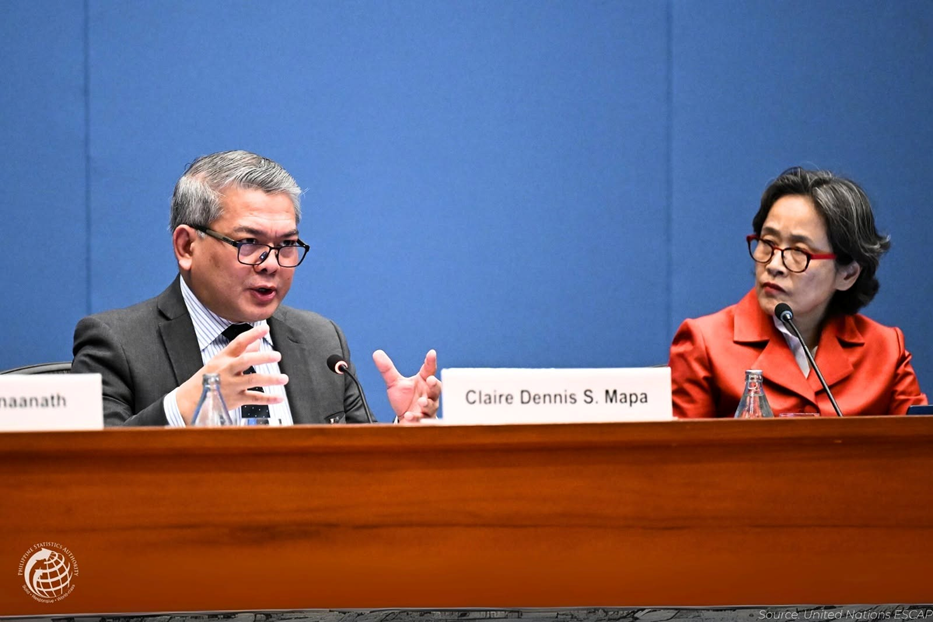
“The proclamation demonstrates this administration’s commitment to building a more inclusive and resilient CRVS through a whole-of-nation approach,” said PSA Undersecretary Claire Dennis S. Mapa, PhD, National Statistician and Civil Registrar General. “With the PSA’s leadership and the collective efforts of our partners, we are confident that we will achieve the goals of the CRVS Decade and ensure that every Filipino is afforded the right to legal identity and the benefits that come with it.”
The extension aligns with commitments made during the Third Ministerial Conference on CRVS in Bangkok, Thailand, where Usec. Mapa formally introduced the Ministerial Declaration adopting the Decade of Action for Inclusive and Resilient Civil Registration and Vital Statistics in Asia and the Pacific (2025–2030).
A central driver of this effort is the PSA’s Birth Registration Assistance Project (BRAP). Recognized by the United Nations Economic and Social Commission for Asia and the Pacific (UN ESCAP) in its 2025 regional progress report as a “Best Practice,” BRAP focuses on delivering free birth registration to hard-to-reach and historically underserved communities.
“The extension of the CRVS decade through 2030 allows us to build on the gains of our programs that have made a real difference in the lives of Filipinos,” Usec. Mapa added.
As of July 3, 2026, the BRAP initiative has successfully facilitated the free birth registration of 554,085 previously unregistered Filipinos, granting hundreds of thousands of citizens formal legal identity and essential access to public services.

