


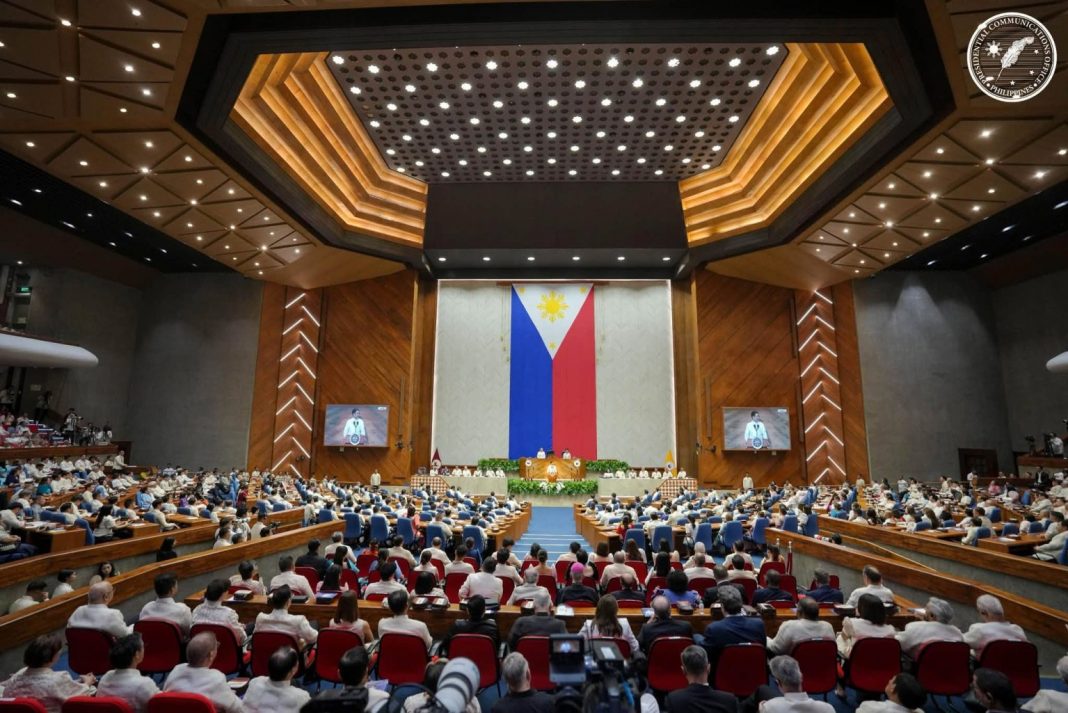
President Ferdinand R. Marcos Jr. reaffirmed the national government’s commitment to supporting the transport sector and protecting commuters from the burden of volatile global oil prices driven by international crises.
Speaking during his State of the Nation Address (SONA) before a joint session of Congress at the Batasang Pambansa, President Marcos emphasized that public transportation serves as a vital economic engine for the country, necessitating targeted interventions for drivers, operators, and passengers alike.
“Ang sektor ng transportasyon ang pinakamatinding tinamaan ng epekto ng krisis. Tsuper, operator, pasahero, manggagawa, o negosyo man — lahat ay umaray sa matarik na pagtaas ng presyo ng produktong petrolyo. Ngunit hindi natin kayang hayaang tumigil o maantala ito, dahil ito’y nagsisilbing piston ng ating ekonomiya,” President Marcos said.
(The transport sector was the hardest hit by the crisis. Drivers, operators, passengers, workers, or businesses — everyone felt the burden of steep petroleum prices. But we cannot allow it to stall or stop, because it serves as the piston of our economy.)
To cushion the impact of fuel surges, the administration deployed several financial support mechanisms across the nationwide transport network:
-
AICS Cash Assistance: Over 1.8 million public utility drivers received direct financial relief through the Assistance to Individuals in Crisis Situation (AICS) program.
-
Fuel Subsidies: A P10-per-liter diesel subsidy was provided to public utility jeepneys (PUJs) and UV Express vehicles to offset operating costs.
-
Service Contracting Program: The revived initiative provided participating bus and jeepney drivers with reliable earnings calculated on a distance-traveled basis.
-
Livelihood Support: Public utility drivers gained supplementary income streams via the dedicated TUPAD Tuloy-Pasada program.
Fare Subsidies and Commuter Savings
The administration also prioritized direct savings for millions of daily commuters through targeted discount structures and free transit options:
| Beneficiary Category | Discount / Benefit |
| Regular Commuters | 20% fare discount |
| Students, Senior Citizens, & PWDs | 40% total fare discount |
| MRT-3 & LRT-2 Passengers | 50% fare discount, plus holiday and Sunday rate reductions |
| General Public | Inter-agency Libreng Sakay (Free Ride) deployments |
Slashing Logistics Fees and Supporting Agriculture
To keep essential goods affordable and streamline supply chains, the government temporarily suspended or reduced operational fees across major national transit hubs:
-
Port & Airport Charges: Temporary waivers and reductions were applied to landing, takeoff, harbor, anchorage, berthing, storage, and passenger service fees—including a temporary waiver of terminal fees at the Port of Cebu.
-
Land Transport Hubs: Terminal fees for public utility vehicles at the Parañaque Integrated Terminal Exchange (PITX) were suspended for three months.
-
Agricultural Logistics: Terminal fees for agricultural cargo transported via Roll-on/Roll-off (Ro-Ro) vessels were reduced from $\text{PhP } 500$ down to $\text{PhP } 1$. Furthermore, trucks accredited by the Department of Agriculture were granted toll-free passage on expressways.
President Marcos assured the nation that these comprehensive interventions have successfully cushioned millions of Filipino workers, commuters, and agricultural sector workers from global market shocks.
“Mga kababayan, sa ating pagbalik-tanaw, kaya ko kayong harapin, at sabihin na ginawa natin ang lahat ng nararapat upang malunasan ang mga epekto ng krisis,” President Marcos concluded.
(My countrymen, looking back, I can face you and say that we did everything necessary to mitigate the effects of the crisis.)

