The umbrella organization of the housing sector dubbed as “legislative duress” House Bill No. 9697, recently reported out by the housing committee in the Lower House to amend Republic Act No. 7279 or the Urban Development and Housing Act (UDHA).
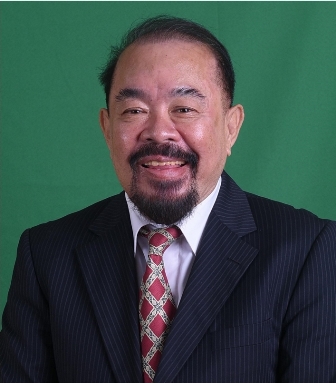
Chamber of Real Estate and Builders’ Associations (CREBA) president Noel Toti M. Cariño said the restrictive conditions and requirements under HB 9697 would make it virtually impossible to comply with the law’s “balanced housing development” (BHD) requirement, also known as the social housing quota.
Cariño said there is high probability that the additional “coercion” will lead to abandonment of planned residential developments in favor of less demanding investments, resulting in an across-the-board reduction in housing production, including compliance projects.
“Reduced production for other housing market segments means reduction of socialized housing output itself under the BHD framework,” Cariño stressed.
The UDHA requires developers to produce socialized housing equivalent to a percentage of the total cost of their proposed residential project – 15% in the case of a subdivision, or 5% in case of a condominium.
HB 9697 intends to amend this provision by requiring that compliance projects must be located within the principal project itself or within the same LGU.
“We fail to see the logic behind this amendment; it ignores present-day land economics and the realities for UDHA beneficiaries,” Cariño said.
He stressed that this is particularly unreasonable when the principal projects are located in urban or peri-urban areas and rapidly emerging growth centers across the country, where extremely high land values make it economically prohibitive to acquire land for socialized or low-cost housing development.
He also said no private developer could possibly construct socialized housing within projects designed for the middle- or upper-income market, as these carry a high-value land component that cannot fit into the socialized housing price ceiling structure.
Cariño pointed out that the cost of the land component alone of a socialized housing unit in these areas would already exceed the allowable selling price of the entire package, placing it beyond the beneficiaries’ affordability.
“The UDHA has unjustly offloaded unto private businesses a vital public welfare responsibility of Government; the least that Government can do is mitigate – rather than aggravate – the burdens and losses that quota compliance entails,” Cariño said.
He said that while CREBA appreciates Congress’ effort to revisit the quota requirement, however, the group urges substantial revisions of HB 9697 to preclude replacing one coercive framework with another.
Cariño added that his group has already submitted to the Lower House’s housing committee concrete measures designed to preserve the social objectives while creating compliance mechanisms that expand – rather than discourage – private sector participation in addressing the country’s housing backlog.