


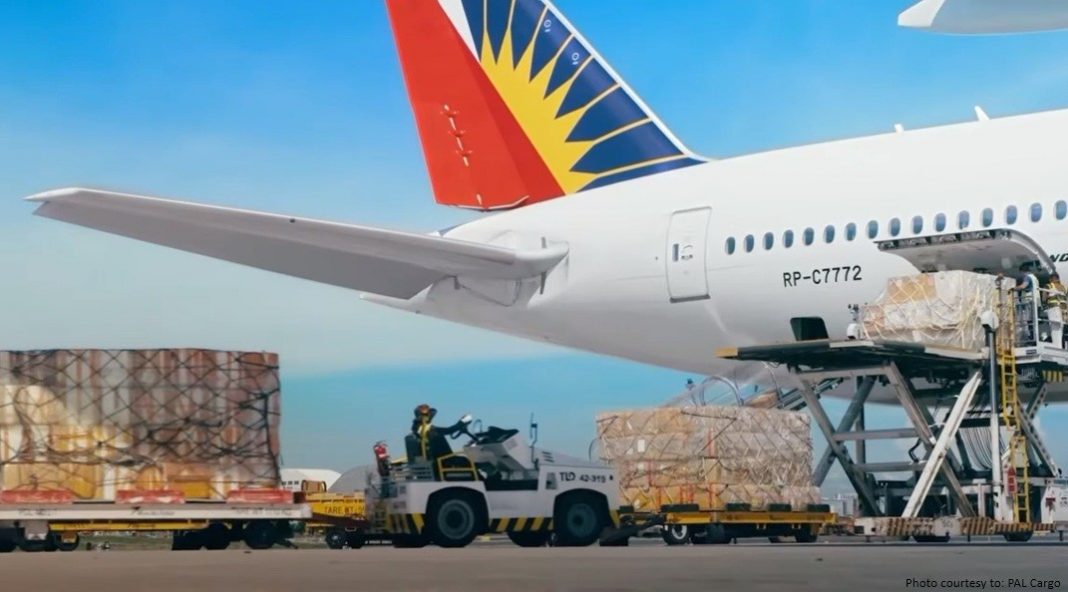
The volume of cargo carried by the Philippines’ domestic airfreight forwarders slipped in the first half of 2026, according to newly released statistics from the Civil Aeronautics Board’s (CAB) Planning and Research Division.
This decline comes despite the rapid growth of the broader logistics and e-commerce delivery sectors. At the same time, these discrepancies raise questions about where the country’s surge in parcel and freight demand is being felt.
CAB’s “Top 30 Domestic Forwarders” report, dated August 20, 2026 (https://tinyurl.com/2ksh9bp9), put total chargeable weight moved by air across the country’s domestic network at 31.9 million kilograms for January to June 2026. That figure is down from roughly 32.8 million kilograms in the same period of 2025, or a year-on-year decline of around 2.8%. The downturn in domestic airfreight volume continues a trend noted earlier this year, as it was reported down 3.3% in the first quarter of 2026.
AP Cargo Logistics Network Corp. continues to be the leading player in the industry, ranking first on the Civil Aeronautics Board’s list with 7.76 million kilograms transported in the first half of the year. This accounts for a 24.31% market share. However, this lead has significantly shrunk from the over 32% share the company had just a year ago, representing a decrease of roughly eight percentage points. Despite this decline, AP Cargo maintains its top position for the fifth consecutive year.
LBC Express, Inc. ranks second behind AP Cargo, with a total of 3.28 million kg, accounting for 10.28% of the market share. Following them are Lite Xpress Int’l., Inc. with 2.88 million kg (9.03%), 2GO Express, Inc. with 2.13 million kg (6.67%), and ASP Airspeed Philippines, Inc. with 1.57 million kg (4.91%). Collectively, the top five carriers represent 55.2% of all domestic air cargo movement, while the top 10 carriers control 71.29% of the market.
In terms of total volume moved, direct shipments constituted the largest share at 54.15% (17.28 million kg), while consolidated shipments accounted for 45.71% (14.59 million kg) and breakbulk made up a negligible 0.14%.
This dip in domestic air cargo tonnage stands in contrast to the trajectory of the broader Philippine logistics and e-commerce delivery market, which multiple industry trackers describe as expanding briskly.
The e-commerce logistics market in the Philippines, which includes last-mile delivery, fulfillment, and merchant-support services for platforms such as Shopee, Lazada, and TikTok Shop, is expected to grow from approximately $1.28 billion in 2025 to $2.37 billion by 2031. This represents a compound annual growth rate of 10.8%, according to a study by Ken Research (https://www.kenresearch.com/industry-reports/philippines-express-and-ecommerce-logistics-market).
International air cargo and mail volumes handled at Philippine gateways increased by 16% year-on-year in the first quarter of 2026, reaching 124.457 million kg. This growth was primarily driven by export activities in the electronics, apparel, and e-commerce supply chains. Regional gateways also exhibited strong performance; for instance, air cargo throughput at Mactan-Cebu International Airport grew by 23.6% year-on-year in the first seven months of 2025, with domestic cargo increasing by 17.5%. As estimated by Mordor Intelligence (https://www.mordorintelligence.com/industry-reports/philippines-freight-and-logistics-market), the overall freight and logistics market in the Philippines is now valued at approximately $16.2 billion.

