


New NAIA Infra Corp. (NNIC) has remitted P78 billion to the government and spent P6.8 billion on the rehabilitation and modernization of Ninoy Aquino International Airport (NAIA) since taking over the country’s main gateway on Sept. 14, 2024.
The P78 billion represents payments made under the NAIA public private partnership (PPP) as of Aug. 15, 2026. Under the concession agreement, the government receives a P30-billion upfront payment, a fixed P2-billion annual payment and 82.16% of gross airport revenues covered by the revenue sharing arrangement.
NNIC, meanwhile, is responsible for operating, maintaining and modernizing NAIA. The P6.8 billion spent so far covers completed and ongoing repairs, rehabilitation, replacement of aging equipment, passenger processing systems and capacity improvements, and forms part of a broader multi-year modernization program.
“This is what the concession was designed to do: generate substantial and continuing revenues for government that can help support public services and infrastructure, while bringing in private sector resources to improve the airport,” NNIC President Ramon S. Ang said.
“We have made significant progress in less than two years, but there is still a lot more work ahead. Our investments will continue as we modernize NAIA while keeping the airport fully operational,” he said.
Since the takeover, NNIC has expanded and reconfigured terminal curbsides, including the expansion at Terminal 2 that added eight vehicle lanes. At Terminal 1, Curbs C and D at the arrivals extension area have also been opened, providing additional space for passenger pick ups and helping ease vehicle congestion at the terminal.
Work is now underway on a Ground Transportation Center at Terminal 3 as part of a broader effort to consolidate and better organize transport services around the airport’s busiest terminal.
Parking at Terminals 1, 2 and 3 has been automated, while NNIC has deployed more than 2,500 new baggage trolleys, 11,820 passenger seats and 20 new inter terminal shuttle buses. Airport Wi Fi capacity has been upgraded, alongside rehabilitation of power and air conditioning systems, elevators, escalators, walkalators, restrooms and other aging facilities. Baggage handling systems have also been upgraded.
Beyond the terminals, NNIC has carried out flood mitigation work around NAIA, clearing nearby waterways and drainage systems to improve water flow and reduce flood risk.
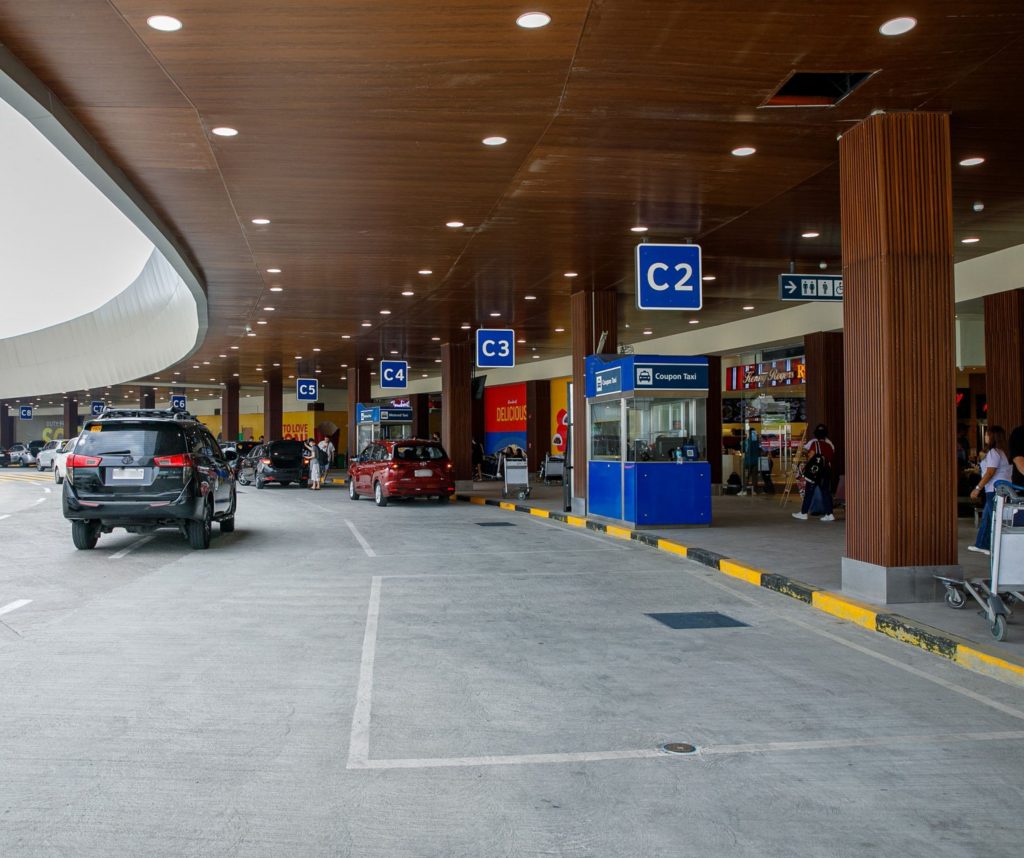
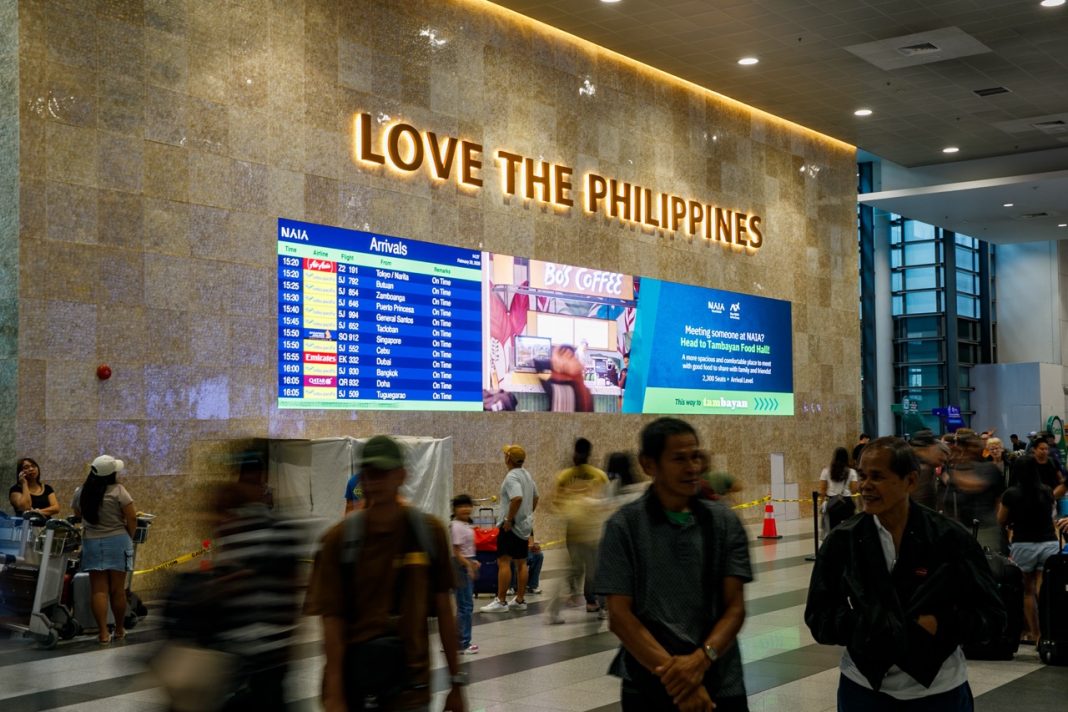
Wayfinding across the airport is being progressively upgraded, with older directional signs being replaced by more modern signage that is easier for passengers to follow. Flight Information Display Systems (FIDS) have also been upgraded and expanded across the terminals, giving passengers better access to real time flight information.
NNIC has ordered new passenger boarding bridges as part of the replacement and rehabilitation of aging airport equipment. Installation is being carried out in phases while the terminals remain in operation.
At Terminal 2, a new North Wing Bus Gate is scheduled to open in mid September, expanding the terminal’s ability to handle flights at remote aircraft stands and improving the use of available gate capacity.
A total of 517 biometric enabled passenger processing units have been deployed across the terminals for check in, security and boarding. Self check in kiosks, automated pre security gates and self boarding gates are already being used by a growing number of airlines.
NNIC also funded 78 new biometric Immigration e gates at Terminals 1 and 3, which are operated by the Bureau of Immigration. The e gates can process eligible travelers in about 20 seconds, helping increase processing capacity during peak periods.
Operational changes have included the reassignment of airlines among terminals, reconfiguration of aircraft parking and airside movements, and new performance agreements with airlines and ground service providers aimed at setting clearer responsibilities and service standards across airport operations.
Passenger facilities have also expanded. Over 65 new restaurant and retail concepts have opened in repurposed areas at Terminal 3, together with new food halls and lounges, while similar improvements are underway at Terminals 1 and 2.
In March 2026, NAIA ranked seventh globally for layover food options and sixth for affordable airport lounge access in a study by UK based Airport Parking and Hotels covering the world’s 50 busiest airports.
NAIA also received its first Airport Customer Experience Accreditation from Airports Council International in 2025. An ACI Airport Service Quality survey of passengers across all terminals gave NAIA a satisfaction score of 4.06 out of 5, above the 4.0 performance requirement under the concession agreement.
NNIC said the modernization has to be carried out around daily airport operations rather than through extended closures. Work will continue across terminal buildings, airside infrastructure, power and utility systems, baggage systems, passenger processing technology and other facilities needed to improve NAIA’s capacity and reliability.
Taken together, these improvements have helped NAIA manage traffic well above its original design capacity of about 35 million passengers a year. The airport served a record 52.02 million passengers in 2025 while maintaining stable operations through peak travel periods.
NNIC took over NAIA’s operations and maintenance on September 14, 2024 under a 15-year PPP concession. NAIA remains government owned while NNIC is responsible for operating, maintaining, rehabilitating and expanding the airport during the concession period.

