


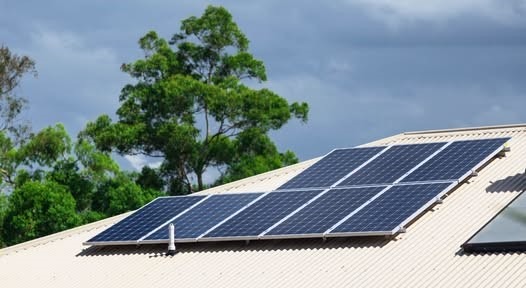
The Energy Regulatory Commission (ERC) has proposed a comprehensive overhaul of its regulatory framework to accelerate the adoption of demand-side programs, specifically Net-Metering (NM) and Distributed Energy Resources (DER).
The landmark draft rules aim to slash bureaucratic red tape, lower installation costs, and significantly expand access for electricity consumers looking to generate their own clean energy.
The proposed reforms represent a major stride in the ERC’s mission to scale up renewable energy integration and transition toward a highly inclusive, consumer-driven power sector.
A core pillar of the draft framework is the dramatic reduction of administrative barriers that have historically delayed consumer interconnection:
-
Accelerated Timelines: Interconnection processing for net-metering applicants will be cut in half, reducing the timeline to 10 working days from the current 20.
-
Deemed Approved Provision: If a Distribution Utility (DU) fails to install the required bidirectional meter within the 10-day window, the application will receive automatic or “deemed” approval.
-
100% Digital Execution: The ERC will shift all Certificate of Compliance (COC) applications fully online, legally recognizing digital submissions and e-signatures while entirely eliminating costly notarization requirements.
To ensure that renewable energy generation is financially viable for everyday Filipinos, the ERC is tackling hidden upfront costs and technical hurdles:
-
Affordable Metering: The ERC will actively revisit and review the additional costs imposed on residential bidirectional meters.
-
Simplified Technical Compliance: Small-scale solar and renewable systems will be exempted from expensive technical studies. Testing will be restricted strictly to essential safety checks, with an option for waiver-based interconnection.
-
Bureaucracy Relief: In alignment with the Joint Memorandum Circular of the DOE, DILG, and DPWH, CFEI receipts will be recognized as valid proof of compliance if processing exceeds seven working days.
As of June 30, 2026, ERC data shows 23,684 net-metering prosumers (with a combined capacity of 232 MWp) and 181 DER participants (totaling 226 MWp) currently registered nationwide. The proposed framework aims to exponentially grow these numbers through aggressive expansion policies:
-
Lifting the Cap: The restrictive 1-megawatt (MW) capacity cap for DER will be entirely removed.
-
Inclusion of Contestable Customers: Large-scale energy consumers (contestable customers) will now be permitted to participate in both NM and DER programs.
-
Innovative Crediting & Grid Perks: The draft introduces multi-site crediting, grants priority dispatch for renewable energy in off-grid areas, and offers optional Renewable Energy Certificate (REC) metering alongside clear REC ownership rules.
-
“We are removing the barriers that have long prevented consumers from participating in the energy transition. These reforms make it faster, more affordable, and more accessible for Filipinos to generate their own power, while ensuring that the system remains fair, reliable, and responsive to the needs of the public,” said Atty. Francis Saturnino C. Juan, ERC Chairperson and CEO.
This sweeping initiative marks a definitive shift by the ERC away from reactive governance and toward anticipatory, forward-looking regulation. By lowering the barrier to entry, the ERC is empowering ordinary Filipino consumers to evolve into active “prosumers,” driving an adaptive, resilient, and decentralized energy future for the Philippines.

