


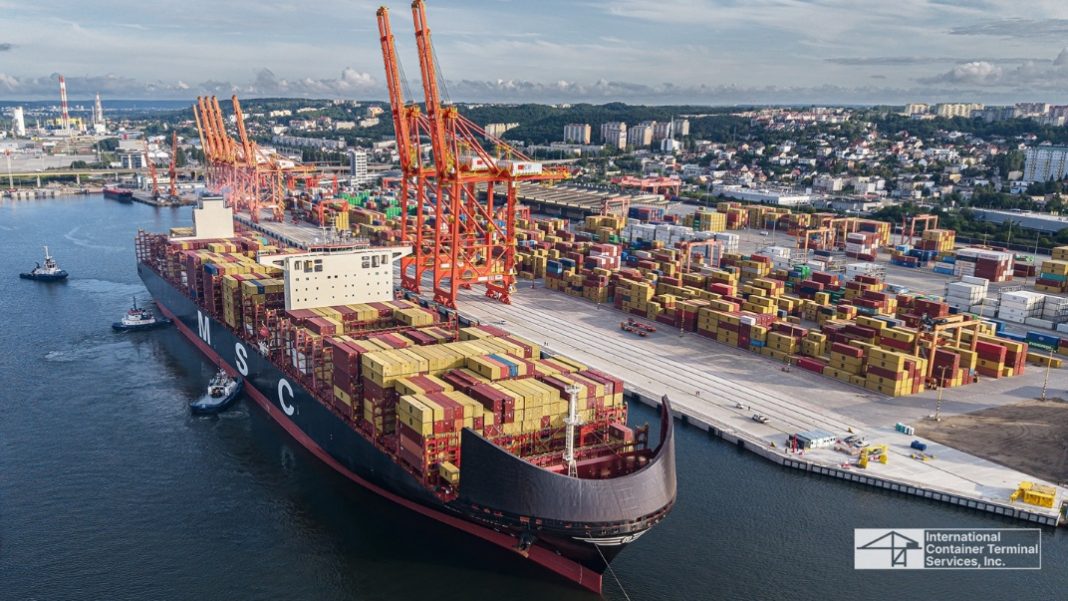
Baltic Container Terminal (BCT), International Container Terminal Services, Inc.’s (ICTSI) operation at the Port of Gdynia, Poland, successfully handled the inaugural call of MSC Venice – the largest and longest vessel to call at the Port of Gdynia.
The 399-meter-long vessel with a capacity of 16,652 twenty-foot equivalent units (TEU) recently docked at BCT, demonstrating the port’s capability to service the largest container ships operating in the Baltic Sea.
Piotr Gorzeński, Port of Gdynia Authority management board president and chief executive officer, highlighted the recent developments in the port and how they paved the way for the milestone: “The maiden call of MSC Venice is a historic moment and a very tangible result of the investments that have transformed the capabilities of our ports in recent years. The deepening of port waters, the reconstruction of the Helskie Quay, and the expansion of Turning Basin No. 2 have created the conditions for the safe handling of the largest container vessels entering the Baltic Sea. This is an important step for the Port of Gdynia, BCT and the entire port and logistics sector in Gdynia.”
On the other hand, Patrick Chan, BCT chief executive officer, said: “The arrival of MSC Venice is a defining moment for BCT and the Port of Gdynia. It validates the significant investments made by all stakeholders to accommodate the next generation of larger container ships and reinforces our position as a deep-water gateway port to support Poland’s economic growth.”
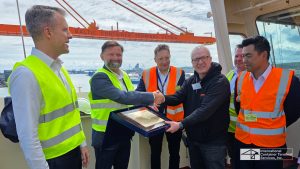
The vessel’s arrival marks the completion of recent upgrades in BCT, which include the commissioning of new quay cranes and yard equipment—investments that have significantly expanded the terminal’s operational capabilities and capacity efficiently handle the largest container vessels in the Baltic Sea. The successful call is also a result of years of cooperation with and commitment from numerous partners – the Port of Gdynia Authority, the Maritime Office in Gdynia, the Polish Navy and all stakeholders involved in the development of the port.

