


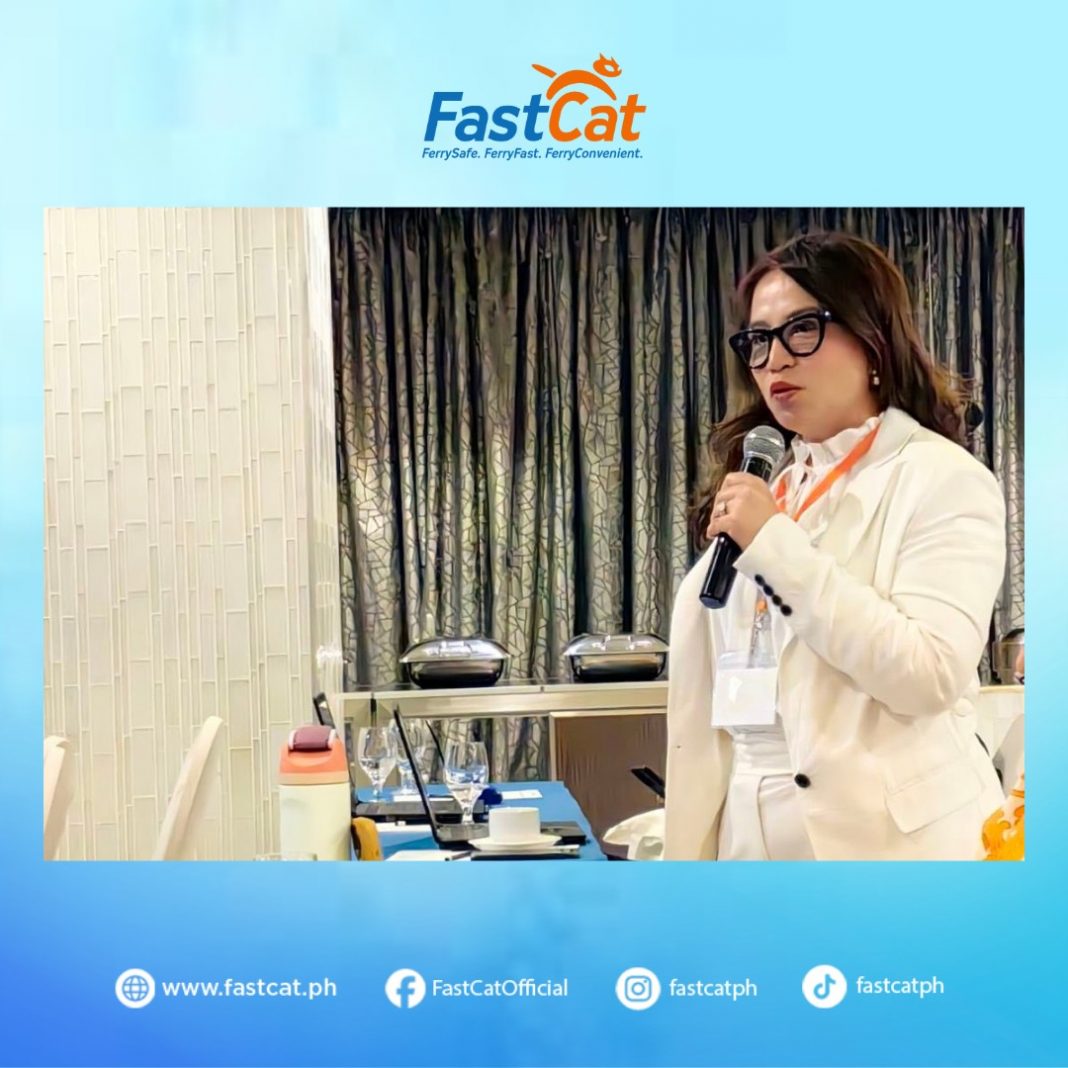
FastCat, a leader in modernized domestic shipping, reaffirmed its commitment to a greener maritime future through its active participation in the National Kick-Off Workshop on GHG Emissions Data and the National Action Plan (NAP).
Held recently in Cebu, the workshop was spearheaded by the Maritime Industry Authority (MARINA), in collaboration with the International Maritime Organization (IMO) and the World Maritime University (WMU).
As the maritime sector faces increasing pressure to reduce its carbon footprint, FastCat recognizes that the voyage toward decarbonization begins with precision. The workshop serves as a foundational pillar for the Philippines’ strategy to meet international environmental standards while addressing the unique geographical needs of the archipelago.
FastCat views this initiative as a critical catalyst for three primary objectives:
-
Establishing a National GHG Data Framework: Standardizing how emissions are measured to ensure accountability.
-
Improving Multi-Sectoral Coordination: Aligning the goals of government regulatory bodies with the operational realities of private ship owners.
-
Strengthening Data-Driven Decision-Making: Moving away from anecdotal evidence toward empirical data to guide investments in green technology.
While the transition to “blue shipping” is essential, FastCat acknowledges the significant “on-the-water” hurdles facing domestic operators. These include high operational complexities, resource constraints, and the logistical challenges of retrofitting existing fleets.
“Sustainability is not just a high-level goal; it is a fundamental responsibility to the communities and ecosystems we serve,” said a FastCat representative. “For decarbonization to be successful, it must be inclusive. We are focused on finding practical, scalable solutions that ensure no operator—or island community—is left behind in this transition.”
FastCat continues to lead by example by focusing on:
-
Digitalization: Adopting transparent data-sharing practices to track and reduce fuel consumption.
-
Operational Efficiency: Maintaining a fleet of modern Catamarans designed for higher safety standards and lower environmental impact compared to traditional vessels.
-
Collaborative Partnerships: Working closely with MARINA and international experts to ensure Philippine maritime policies are both ambitious and achievable.
Through this partnership with MARINA, the IMO, and WMU, FastCat is not just preparing for the future of shipping; it is actively helping to build it.

