


The Bureau of Customs (BOC) vowed that digitalization and modernization at Customs is the core of its efforts stressing that it is a strategic imperative rather than an operational option to drive national competitiveness, trade facilitation, transparency, and public trust.
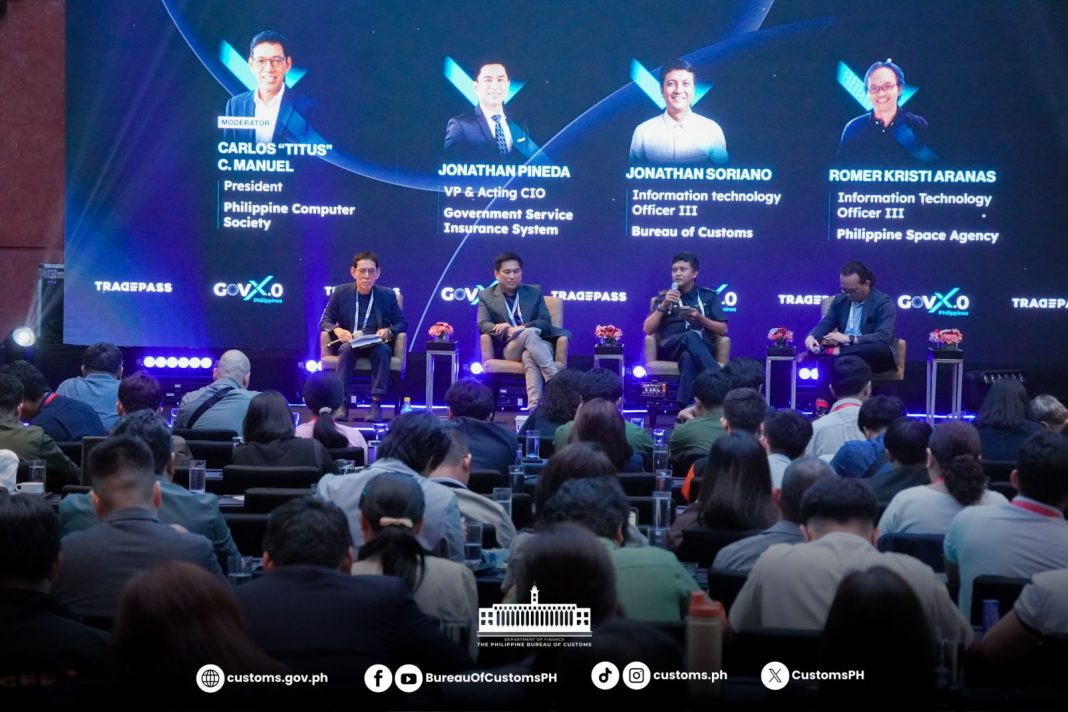
The agency showcased these initiatives at the GOVX.0 Philippines Summit 2026 held on May 6, organized by Tradepass Global.
Customs Deputy Commissioner Atty, Revsee A. Escobedo, who served as one of the resource speakers during the summit, in his presentation underscored these initiatives to include enhancement of the Customs Core Processing System and the continued deployment of key digital solutions such as the Automated Export Declaration System, Enhanced Certificate of Payment, e-Service Catalog, Online Tax Estimator, and the Origin Management System.
These reforms are designed to reduce manual processes, minimize delays, and improve efficiency in customs operations while ensuring greater transparency in trade transactions, he said.
The Deputy Commissioner likewise emphasized that the Bureau’s digitalization efforts go beyond the adoption of new technologies. These efforts focus instead on fundamentally improving institutional processes to deliver faster, smarter, and more transparent public service in line with Commissioner Ariel F. Nepomuceno’s transformation and modernization agenda.
In a panel session Information Technology Officer III Jonathan Soriano of BOC’s Management Information Systems and Technology Group (MISTG) emphasized that the value of emerging technologies in government must be measured not by innovation alone, but by their ability to deliver real, measurable public benefit.
He stressed the importance of balancing innovation with governance, accountability, and public trust to ensure that digital transformation strengthens rather than undermines institutional integrity.
These reforms form part of the Bureau’s broader digital transformation roadmap in line with the Integrity, Accountability, and Modernization Program of the Commissioner, covering the modernization of core customs systems, cybersecurity and cloud infrastructure, data analytics, risk management systems, non-intrusive inspection technologies, port community integration, and personnel capability development.
The BOC further reiterates its commitment to sustaining its modernization agenda through collaboration, innovation, and capacity-building, as it works to maintain a secure, efficient, and future-ready customs system that supports economic growth and protects national borders.

