FAST Logistics Group, the country’s leading third-party logistics (3PL) provider, said the Department of Trade and Industry’s (DTI) plan to place solar energy systems under Mandatory Product Certification is an added layer of red tape that could slow the country’s transition to green energy.
The proposed measure seeks to ensure that imported solar energy systems strictly comply with product standards before they are sold in the Philippine market.
Manuel L. Onrejas Jr., CEO for Logistics at FAST Logistics Group, told Logistics News PH that the DTI’s plan to regulate solar energy systems would only delay the shift to renewable energy. “It will discourage the shift to solar power,” Onrejas said.
The proposed regulation covers mandatory product certification for both local and foreign manufacturers of inverters, rapid shutdown devices, battery charge controllers, solar photovoltaic (PV) modules, PV cables, and battery energy storage systems (BESS).
“That’s red tape, another bureaucratic level,” said Onrejas.
He argued that branded products, in particular, do not require additional layers of verification because local buyers typically have established business relationships with suppliers and can hold them accountable if products prove to be substandard.
Onrejas, however, said that if the DTI proceeds with the mandatory standards for solar energy systems, the process should be implemented digitally through barcodes or other digital systems and military-style sampling inspections. Otherwise, “it will take forever” to complete all the required checks.
Instead of imposing mandatory product certification, Onrejas urged the DTI to facilitate and streamline the permitting process for solar power projects. He added that the government should also make incentives for companies shifting to green logistics, such as electric vehicle acquisitions, more attractive.
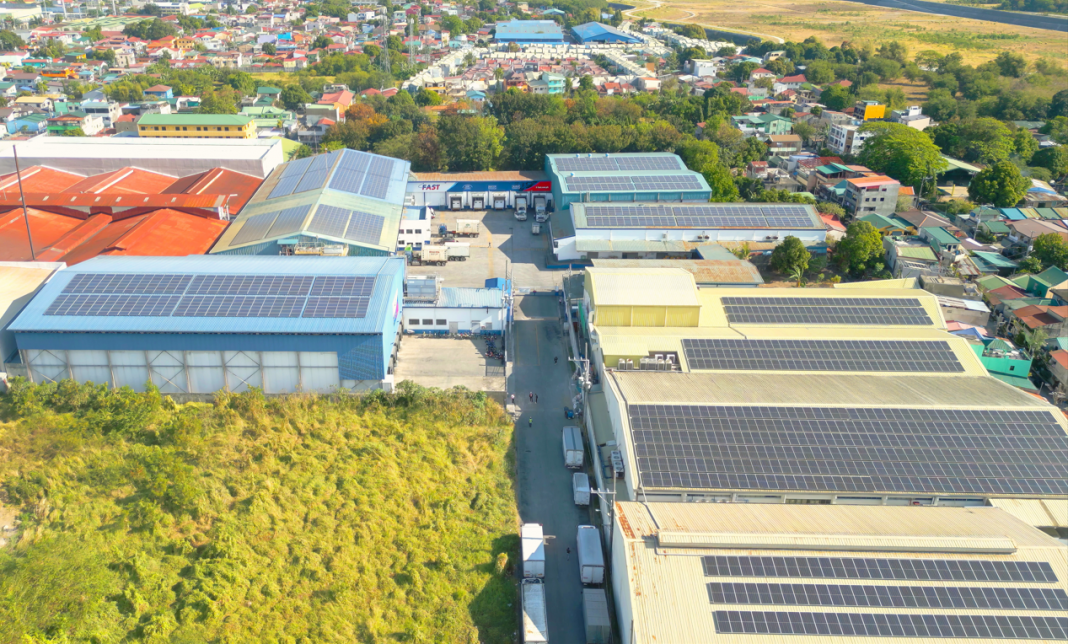
Recently, FAST announced plans to roll out fully solar-powered warehouses with integrated battery storage systems across its nationwide network as part of its goal of achieving net-zero emissions by 2050.
FAST’s solar energy roadmap is significant because of the scale of its operations. The company currently operates the Philippines’ largest warehousing network, spanning more than 160 dry and cold-chain facilities, over 2 million square meters of warehouse space, more than 1 million pallet positions, and annual throughput exceeding 1 billion units.
FAST also manages the country’s widest transport network, covering more than 3,100 trucks nationwide and working with over 900 trucking partners.
By expanding solar power across its nationwide footprint, FAST has the potential to significantly reduce energy-related emissions across one of the country’s most extensive logistics networks.
DTI’s argument
According to the DTI, the proposed regulation seeks to ensure that solar energy systems sold in the country comply with Philippine National Standards (PNS).
“This is about protecting Filipino consumers from low-quality and potentially unsafe products that may fail after only a short period of use or put homes and establishments at risk. The proposed mandatory product certification also aims to prevent the Philippines from becoming a dumping ground for substandard solar products rejected by other countries,” the DTI argued.
By upholding clear quality standards, the government aims to give Filipinos greater confidence that the solar systems they invest in are durable, properly tested, and capable of delivering long-term savings.
The DTI clarified that the proposed regulation will recognize test reports issued by accredited and recognized testing laboratories. It also does not cover the installation or mounting of solar energy systems.
As the country continues its transition toward cleaner and more affordable energy, the agency said ensuring the quality and safety of solar products is critical to protecting consumers, strengthening trust in renewable energy, and supporting the sustainable growth of the solar industry.
The DTI remains open to suggestions, comments, and feedback on the proposed regulation. Stakeholders and members of the public may submit their inputs to OASFTG@dti.gov.ph until July 25, 2026.