


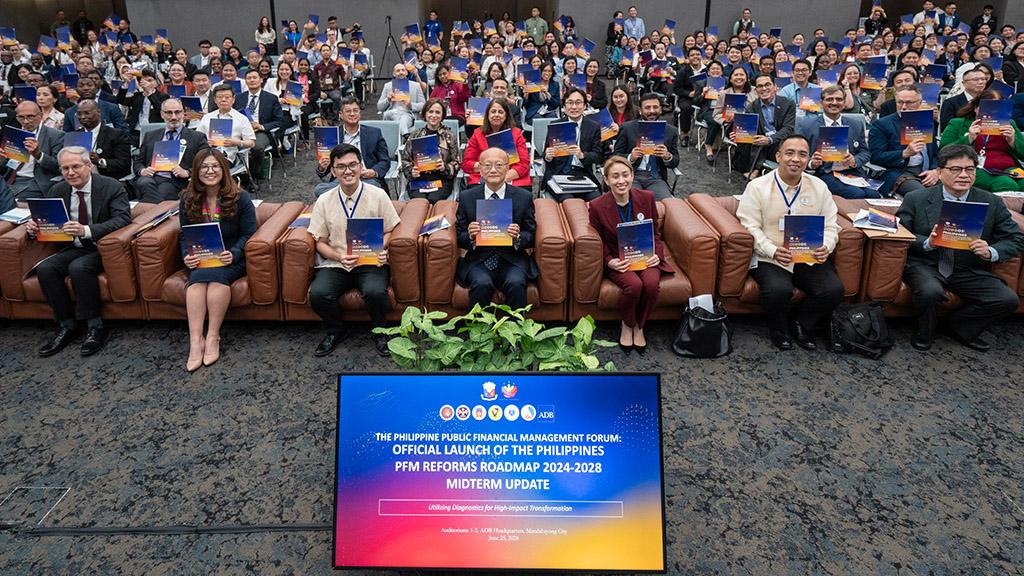
The Philippines has endorsed a comprehensive, government-wide plan to radically reform how public money is allocated, spent, and accounted for.
Backed by the Asian Development Bank (ADB), the initiative aims to optimize the national budget to deliver superior public services, boost climate resilience, and improve the lives of the Filipino people.
The strategy was officially launched today at the ADB headquarters, marking a pivotal milestone in the nation’s governance trajectory.
The newly instituted Updated Public Financial Management (PFM) Reforms Roadmap 2024–2028 moves the country’s financial strategy from diagnosis and planning into concrete action. By enforcing closer coordination among government agencies and setting strict accountability measures, the roadmap ensures every peso works harder.
The reform strategically prioritizes directing funds to the frontline services citizens rely on most:
-
Healthcare and Education
-
Critical Infrastructure
-
Social Protection and Safety Nets “The Philippines is taking the hard work of public financial reform head-on,” said ADB President Masato Kanda. “By grounding reform in evidence, broad participation, and clear accountability, the government is showing how every peso can work harder for the Filipino people. ADB is proud to support this leadership as the country turns an ambitious reform agenda into better services, stronger resilience, and improved lives.”
Beyond operational efficiency, the PFM reform serves as a critical defense against corruption. Aligning with the ADB’s strict zero-tolerance approach to corruption, the roadmap introduces tighter controls, robust data tracking systems, and clearer accountability frameworks.
These mechanisms are designed to plug fiscal leaks and guarantee that development finance directly impacts the communities that need it most.
The roadmap is the culmination of a rigorous, multi-year collaborative effort led by the Philippines’ PFM Committee—comprising the Department of Budget and Management, the Department of Finance, and the Commission on Audit.
Key milestones that shaped the current action plan include:
-
2023: A massive nationwide self-assessment engaging over 1,100 practitioners, local governments, civil society groups, and development partners.
-
September 2024: Official submission to President Ferdinand R. Marcos Jr. following PFM Committee approval.
-
2025: Completion of a comprehensive Public Expenditure and Financial Accountability (PEFA) assessment. This included specialized reviews analyzing how public spending addresses climate change, gender equality, disaster resilience, and the needs of children.
While today’s launch marks a historic breakthrough, officials emphasize that the most critical phase has just begun. Transforming these strategic plans into tangible results will require sustained leadership, disciplined execution, adequate resource allocation, and unwavering accountability.
By maintaining this momentum, the Philippine government and the ADB aim to build enduring public trust and establish a gold standard for fiscal governance in the region.

