


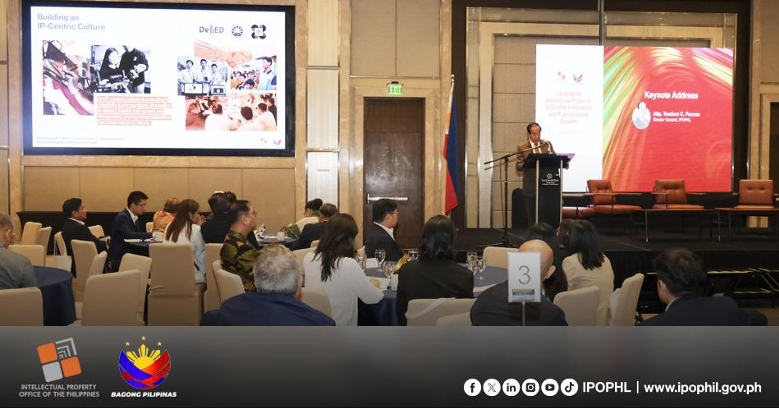
Government officials and international experts in a forum this week said the Philippines risks leaving promising innovations unrealized without stronger support for intellectual property (IP), commercialization and partnerships that can help Filipino ideas reach the market and compete globally.
Discussions throughout the forum “Leveraging Intellectual Property to Enable Innovation and Fuel Inclusive Growth” included advancing women’s participation in IP, adapting to AI and examining the continuing relevance of broadcasting in the digital age.
It also highlighted nurturing creative talent, helping innovations reach the market, strengthening IP protection and fostering an inclusive environment where collaboration, investment and entrepreneurship can flourish.
IPOPHL Director General Teodoro C. Pascua emphasized that innovation begins by developing young people who are curious, creative and capable of turning ideas into valuable IP.
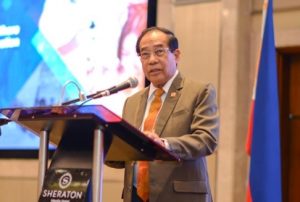
“Beyond academic excellence, we should nurture curiosity, creativity, problem-solving, and innovation among our young people. Students should learn not only to absorb knowledge, but also to create it. They also must understand that their ideas have value that can become IP.”
“We must build a culture where every Filipino believes that their ideas have value, and where every creator believes that their work can become commercially successful.” Highlighting the breadth of issues explored at the forum, Deputy Director General Ann Claire Credo-Cabochan emphasized how the discussions on longstanding issues and ongoing solutions contribute to the national agenda.
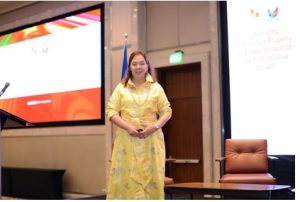
“MSMEs and the Malikhaing Pinoy, two important sectors high up in the agenda of Trade Secretary Maria Cristina Roque, whose leadership is as strong as it is inspiring, and it behooves us in IPOPHL, as a DTI-attached agency, to make a meaningful contribution to the work done in these areas,” DDG Credo-Cabochan said.
“This forum comes at a time when innovation has taken center stage, when it is matched by a blueprint called the National Innovation Agenda Strategy Document, when you have a champion in President Ferdinand Marcos, Jr., whose vision is as compelling as the way he articulates it, and also matches it with the much-needed infusions to the ecosystem,” she added.
As Filipino innovations enter international markets, speakers said IP plays an increasingly important role in protecting them and enabling businesses to compete globally.
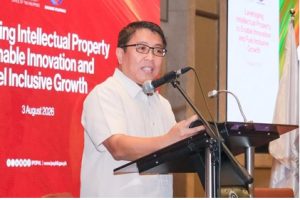
Allan B. Gepty, Undersecretary of the International Trade Group of the Department of Trade and Industry (DTI), said IP strengthens the country’s participation in expanding trade partnerships while safeguarding Filipino ideas, brands and innovations abroad.
“As the Philippines expands its network of free trade agreements and partnerships, IP helps ensure that our ideas, brands, creations and innovations are protected as they reach new markets. When we trade goods and expand services, we are also sharing Filipino creativity, knowledge and ingenuity. Across these trade agreements, IP protection encourages innovation, builds business confidence and makes it easier for companies to work and invest across borders.” Gepty also pointed to the country’s demographic advantage, saying its young population is well positioned to drive a knowledge-based economy.
“In this era, as we transcend toward a knowledge-driven economy, our young and dynamic population is a repository of creative and innovative minds. … We are in an advantageous position, as we have a young and dynamic workforce compared to developed countries with aging populations. We know for a fact that creativity and innovativeness are anchored in young minds.” The discussions also highlighted how effective IP protection encourages collaboration among innovators, researchers and businesses.

Marco Gemmer, Head of Cooperation of the European Union Delegation to the Philippines, said IP rights help create an environment where partnerships can flourish and innovation can be translated into economic value.
“IP rights can create value and new thinking. It’s not just a technical afterthought. If IP rights are in place, they open opportunities for different businesses, researchers, innovators and scientists to come together. This is all in line with the EU’s Global Gateway Strategy, which is our approach for cooperation with partner countries.”
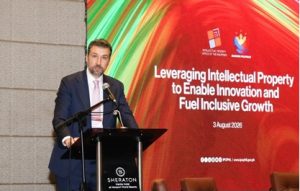
Hans Christian-Baumann, Deputy Head of Mission of the Embassy of Switzerland in the Philippines, likewise underscored the role importance of building a strong IP ecosystem in creating opportunities for people to innovate and contribute to inclusive growth.
“Today’s discussions remind us that protecting IP is ultimately about investing in people. It’s about creating an environment where an IP-centric culture can thrive, where creativity is rewarded, where ideas can become opportunities and where innovation contributes to inclusive and sustainable growth.”

