


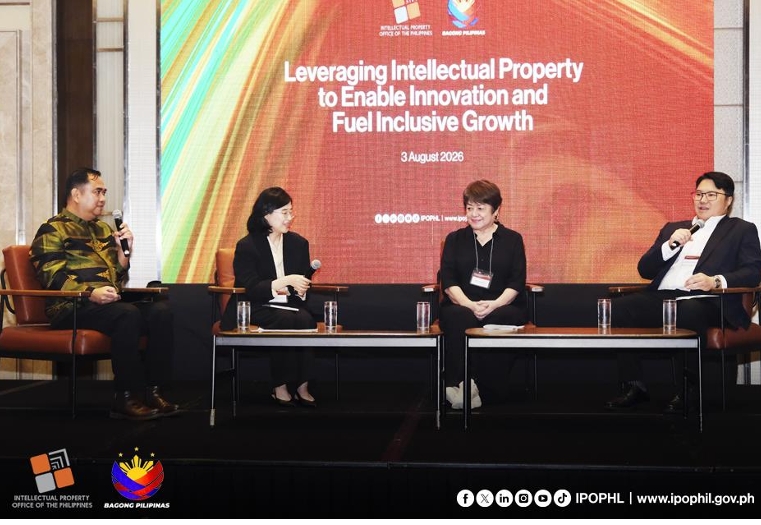
Rapid technological advancements are reshaping how intellectual property (IP) assets are created, used and protected, increasing the need for updated policy frameworks and stronger whole-of-society cooperation to safeguard the intangible resources driving future economic growth.
At the recent forum, “Leveraging Intellectual Property to Enable Innovation and Fuel Inclusive Growth,” government officials, international experts, industry leaders and IP rights holders explored how emerging technologies, particularly artificial intelligence and digital platforms, are transforming the IP landscape. Discussions centered on the need to combat piracy, modernize legal protections for broadcasting and creative works and ensure that AI serves as a tool that amplifies—rather than replaces—human ingenuity.
Piracy, not a victimless crime

Antonio Miguel Lu, Junior Partner at Villareza & Angangco Law Firm, noted that international rules protecting broadcast signals have yet to keep pace with technology. “The [proposed Broadcasting Organizations Treaty] is still not yet finished. The international law governing broadcast signals… was drafted before cable, before satellite and before the internet. So if you ask me, “Does broadcasting still matter today?” My answer is that broadcasting matters so much that we have spent three decades unable to agree on how to protect it.”
The Philippines has been pushing for the resumption and conclusion of negotiations for the treaty which began in 1997. The goal remains the same: to create a global framework that enables the broadcasting industry to adapt to the digital age and face challenges such as rampant piracy.
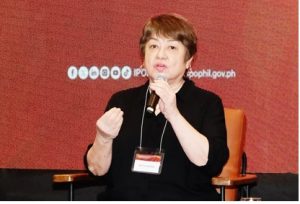
Performers’ Rights Society of the Philippines President Mitch O. Valdes, whose experience as a performer helped shape what would become the IP Code of 1997, underscored the often overlooked human cost of piracy.
“The producer and everybody who works in that production is affected… You are robbing the people behind the scene of their just compensation. It is obviously not a victimless crime. Production shut down because of piracy,” Valdes said.
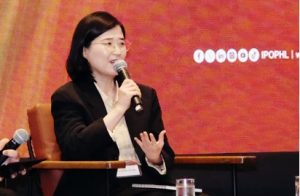
Korea Copyright Protection Agency Regional Director Lee Souk Houng shared how piracy can undermine even the Republic of Korea, whose cultural industries have become a global model for converting creative assets into economic value while strengthening the country’s soft power.
“One of the lessons in Korea’s experience is that protection and access are not in conflict with each other. Audiences should easily access the content they want to see very conveniently, but creators must have the right to expect fair compensation for their work. It is very difficult to balance that, but I think we must protect creators’ rights and copyright. I think content connects people, and copyright is the foundation to sustain that connection,” Young said.
Human creativity at the heart of AI
Meanwhile, a separate session was dedicated to artificial intelligence (AI). Experts agreed that AI presents vast opportunities but its growth must be guided by balanced regulation that fosters innovation while ensuring transparency, accountability and the primacy of human creativity.

Diego Luis S. Santiago, Assistant Director of the Innovation Staff at the Department of Economy, Planning and Development (DEPDev), the lead agency for AI and Data Policy under the National Artificial Intelligence Strategy for the Philippines (NAIS-PH), is working “to ensure that government does not overregulate”
AI as it develops the first national AI governance framework. “We really do see artificial intelligence as a way to strengthen our ability for economic development… We see artificial intelligence as a way to close the gap between inequalities,” Santiago said, while stressing the need for transparency and responsible AI deployment as adoption accelerates.
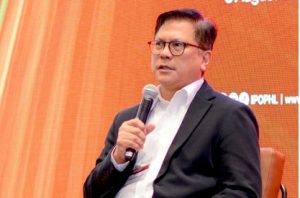
Christopher E. Cruz, Director of the De La Salle IP Office, said AI is blurring the line between human and machine-created works, posing difficult questions for IP.
“The challenge now is… how will you carve out your work with that of the AI?… It’s too intertwined that you now cannot separate what your work is and the work of AI… I don’t have the answers. I have more questions than answers.”

Former IPOPHL Director General Rowel S. Barba emphasized that while AI is transforming innovation, the IP system will continue to recognize human ingenuity.
“AI is changing the way we innovate, but it does not change why intellectual property exists. Innovation will always begin with human imagination, ideation. AI may accelerate creativity, but it is the people who provide the vision, judgment and responsibility.”

Echoing the need to keep people at the center of AI, DOST Assistant Secretary Napoleon K. Juanillo described AI as “a co-creator” but emphasized qualities that remain uniquely human.
“It’s still you and me who has that deep sense of empathy and wisdom and discernment and reflection…The analytics help but at the end of the day it’s really you based on your context based on your relationships and based on the meanings that you attach to the world and so that for me is irreplaceable.”

