


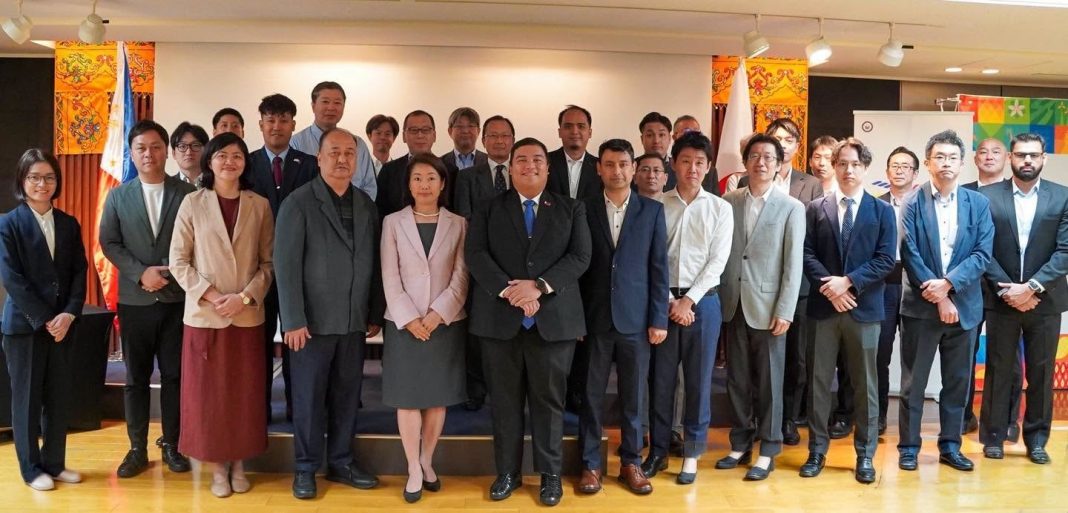
Underscoring deep private sector confidence in the Philippine railway sector, at least 26 reputable Japanese companies have expressed strong interest in the investment opportunities for the Metro Rail Transit Line 3 (MRT-3) Capacity Expansion, Operations, and Maintenance Public-Private Partnership (PPP) project.
The strong investor turnout occurred during a market sounding activity conducted by the Department of Transportation (DOTr), in partnership with the Asian Development Bank (ADB), on June 23, 2026, in Tokyo, Japan.
The initiative aligns directly with directives from President Ferdinand Marcos Jr., who has ordered the DOTr to prioritize the modernization of the MRT-3. The administration recognizes the railway’s critical role in facilitating rapid passenger mobility across Metro Manila and the immense daily benefits a well-maintained mass transit system brings to millions of commuters.
Transportation Secretary Banoy Lopez emphasized the transformative potential of the upcoming partnership:
“The MRT-3 PPP is more than an investment opportunity — it is an invitation to potential investors to help reshape how millions of Filipinos can swiftly move every single day. We are committed to building a railway system our people rightfully deserve, and we look forward to partnering with the private sector to help make this vision a reality.”
Addressing the gathering, DOTr Assistant Secretary for Railways Eduardo Danilo Macabulos highlighted the urgent need for robust transit solutions. Noting that the Philippines remains the most congested country in Asia, Asec. Macabulos stressed that traffic congestion is not merely an inconvenience but an immense economic and personal burden.
“When people spend hours stuck in traffic, they lose time that could have been spent not only on working, but learning, resting, or spending time with their loved ones,” Asec. Macabulos stated. “At the end of the day, our goal is actually very simple: to help people save precious time. If we can give millions of Filipinos even one or two hours back in their day, the impact on their lives can be enormous.”
The MRT-3 PPP serves as just one component of a massive, expanding pipeline of transport infrastructure opportunities tailored for private sector collaboration. In the near term, the DOTr expects to roll out similar Operations and Maintenance (O&M) opportunities for several mega-projects:
-
North-South Commuter Railway (NSCR): A 147-kilometer premier rail system.
-
Metro Manila Subway Project (MMSP): The country’s first 33-kilometer underground railway.
-
Light Rail Transit-2 (LRT-2): O&M and capacity improvements.
-
Philippine Automated Fare Collection System: A modernized, unified ticketing PPP.
These projects are foundational elements of the Philippine government’s broader 30-year Railway Master Plan, which envisions a highly connected, efficient, and sustainable railway network for future generations.
“This is not just about a single project, but part of a broader effort to transform rail and mobility in the Philippines. Again, ultimately, the goal is simple: to give Filipinos back their time,” Asec. Macabulos concluded.

