


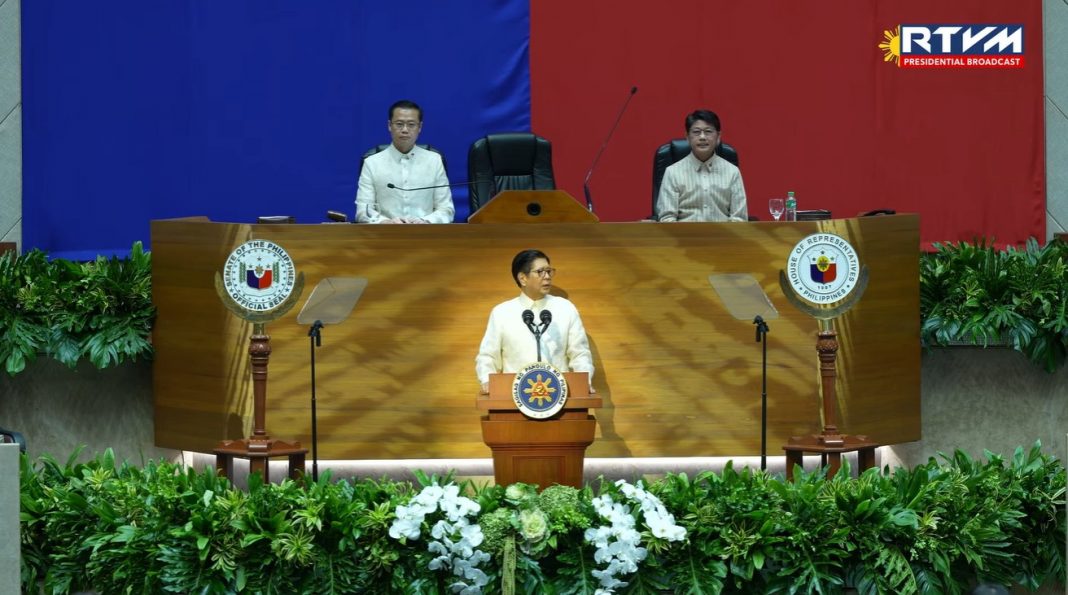
Philippine business groups expressed satisfaction with President Marcos Jr.’s second-to-last State of the Nation Address (SONA), but said the President’s one-and-a-half-hour speech still fell short in several key areas.
The Philippine Chamber of Commerce and Industry (PCCI), the voice of Philippine business, identified 10 positive points in the President’s SONA.
PCCI President Ferdinand “Perry” Ferrer said they were not surprised that the President opened his speech by tackling the hottest issues—flood control and corruption.
“Definitely, PBBM is not mixing words of the gravity of the situation and let evidence track the guilty,” he said.
PCCI also cited the Marcos administration’s preparedness and efforts to build resilience in the wake of the Middle East conflict.
Other positive points highlighted in the SONA included food and energy security; investments in disaster response and resilience; environmental awareness; trade facilitation and digitalization as critical drivers of MSME growth; healthcare assistance for the needy; ASEAN unity and collaboration; education, upskilling, and reskilling to enhance the country’s competitiveness; and the President’s strong statement on defending the country’s sovereignty.
On the flip side, PCCI identified five areas that it believed should have been addressed during the President’s one-and-a-half-hour speech.
First, Ferrer said the President should have laid out a clearer economic agenda, including how the Philippines could remain competitive and streamline business processes, especially within ASEAN, where neighboring countries are also competing for the same investments.
The business community also wanted to hear more concrete plans to ensure regulatory certainty and further improve the ease of doing business in the country.
Other topics that PCCI felt were lacking in this year’s SONA included more detailed plans on energy and food security, as well as strategies for building resilience against future shocks.
PCCI also wanted the President to address education and workforce development to prepare Filipinos for future jobs.
Lastly, the business group wanted to hear more about strengthening collaboration with international partners.
From the exporters’ group, Sergio Ortiz-Luis Jr., president of the Philippine Exporters Confederation Inc. (PhilExport), said the SONA addressed everything they had asked for—and even more.
While Ortiz-Luis lauded the tax relief, especially for micro, small, and medium enterprises (MSMEs), he noted that MSMEs remain the most underfunded sector and called for greater access to financing.
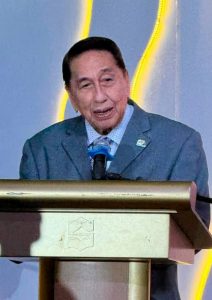
Although he welcomed the subsidies and assistance being provided to Filipinos amid the economic pressures caused by high fuel prices stemming from the conflict in the Middle East, he expressed concern over the government’s rising debt.
“Can we still pay up for our debt. I hope there is a plan,” he said.
Meanwhile, domestic manufacturers said “President Marcos addressed the flood control scandal head-on.”
Federation of Philippine Industries (FPI) Chairperson Elizabeth H. Lee said that by confronting corruption directly, the President demonstrated an unwavering commitment to accountability.
“This anti-corruption drive rests entirely within the government’s power, and its success will be decisive in boosting investor confidence, improving national credit ratings, and restoring trust in public institutions,” said Lee.
On energy, FPI said the President’s directive to lower power costs is essential to placing Philippine manufacturing on equal footing with its ASEAN peers.
FPI also welcomed the administration’s push for long-term energy security through nuclear exploration, natural gas, hydrogen, and renewable energy, saying these reforms could strengthen the country’s industrial resilience.
“Targeted assistance for vulnerable sectors and small businesses is equally vital as inflationary pressures persist,” said Lee. “Sustaining MSMEs means protecting jobs and keeping local supply chains intact. This will not come cheap, but the cost of inaction would be far greater. By cushioning enterprises against rising costs, we can soften the blow of weakening demand while preserving employment and production capacity. The dual impact—jobs retained and supply chains stabilized—helps maintain confidence in the domestic market and shields industry from deeper contraction.”
The administration’s focus on ease of doing business, Green Lanes, and strategic investment initiatives such as Pax Silica offers a strong roadmap, FPI said. “Industry will follow this closely and look forward to the fine print and execution as these policies roll out,” Lee added.
Overall, the manufacturers said the President’s fifth SONA had laid down clear benchmarks for accountability and competitiveness.
“The priority now shifts to swift execution—lowering operational costs, cutting red tape, and ensuring reforms translate directly to the factory floor,” Lee said.

