


Plantitos and plantitas, the army of urban gardeners whose ranks blossomed during the pandemic, may soon have credentials to match their green thumbs.
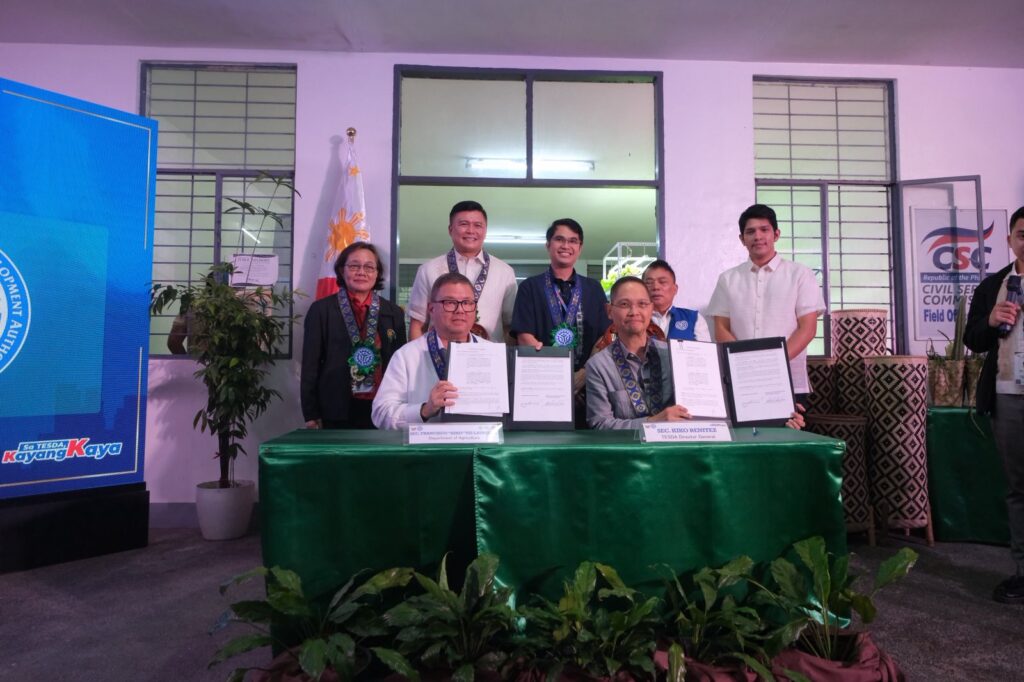
What began as a lockdown pastime is being elevated into a nationally recognized profession after the Department of Agriculture (DA) and the Technical Education and Skills Development Authority (TESDA) forged a five-year partnership to institutionalize urban and peri-urban agriculture as a technical vocation, complete with skills training, certification and career pathways.
The agreement seeks to transform hobbyists into certified urban agriculture practitioners, trainers, assessors and even agricultural educators, while positioning city farming as a practical tool for food security, livelihood creation and climate resilience.
Agriculture Secretary Francisco P. Tiu Laurel Jr. said the initiative builds on a uniquely Filipino instinct that became especially visible during the Covid-19 pandemic, when rooftops, and vacant lots were converted into productive vegetable gardens.
“I have always believed that Filipinos have a special gift. Give us a small patch of land, a rooftop, a balcony or even a few recycled containers, and before long, someone has turned them into a thriving garden,” Tiu Laurel said.
“We are, by nature, nurturers. Today, our task is to match that instinct with knowledge, skills and opportunity,” he added.
At the heart of the partnership is the creation of the Urban Agriculture Production NC II, which will establish national competency standards, training regulations, curricula and assessment tools, formally recognizing urban agriculture as part of the country’s technical and vocational education system.
TESDA Secretary Jose Francisco B. Benitez, who has focused on introducing innovations in tech-voc, underscored the importance of agriculture in boosting the economy — and how skills are a crucial means to achieve food security.
“TESDA has always invested in agriculture, as it’s among the top five sectors where we allocate the most scholarships. Through this collaboration with DA, we further strengthen TESDA’s services that will empower Filipinos to get into urban farming, create livelihood out of it, and ultimately contribute to the economy,” said Benitez.
“Skills for agriculture is a win in many ways: nagbibigay tayo ng Training to Trabaho, at tumutulong tayo para sa food security,” Benitez added.
To bring the program to life, DA and TESDA will convert the TESDA Complex in Taguig into a flagship Urban Agriculture Technology Demonstration and Training Center.
Additional learning hubs will also be established in TESDA regional training centers, DA facilities and selected urban farming sites, showcasing modern techniques such as hydroponics, vertical farming, protected cultivation, container gardening, composting and other climate-smart production systems.
The program also integrates food safety, biosafety, phytosanitary standards and good agricultural practices in line with the Food Safety Act of 2013, ensuring that future urban growers are trained not only to produce more food but to produce it safely.
Beyond certification, the initiative links urban agriculture to employment and entrepreneurship. TESDA-certified graduates will be better positioned to establish microenterprises, train other communities or find work in agriculture-related industries, while local government units, state universities and accredited training institutions will help expand the pool of qualified trainers and assessors nationwide.
“Passion may plant the first seed, but skills and training help it take root, flourish and change lives,” Tiu Laurel said.
In a country where food often travels hundreds of kilometers before reaching consumers, the DA-TESDA partnership signals a broader shift in thinking.
Urban agriculture is no longer viewed simply as a backyard hobby. It is increasingly being recognized as critical infrastructure for more resilient cities, stronger local food systems and a workforce equipped to grow not just vegetables, but economic opportunity.

