


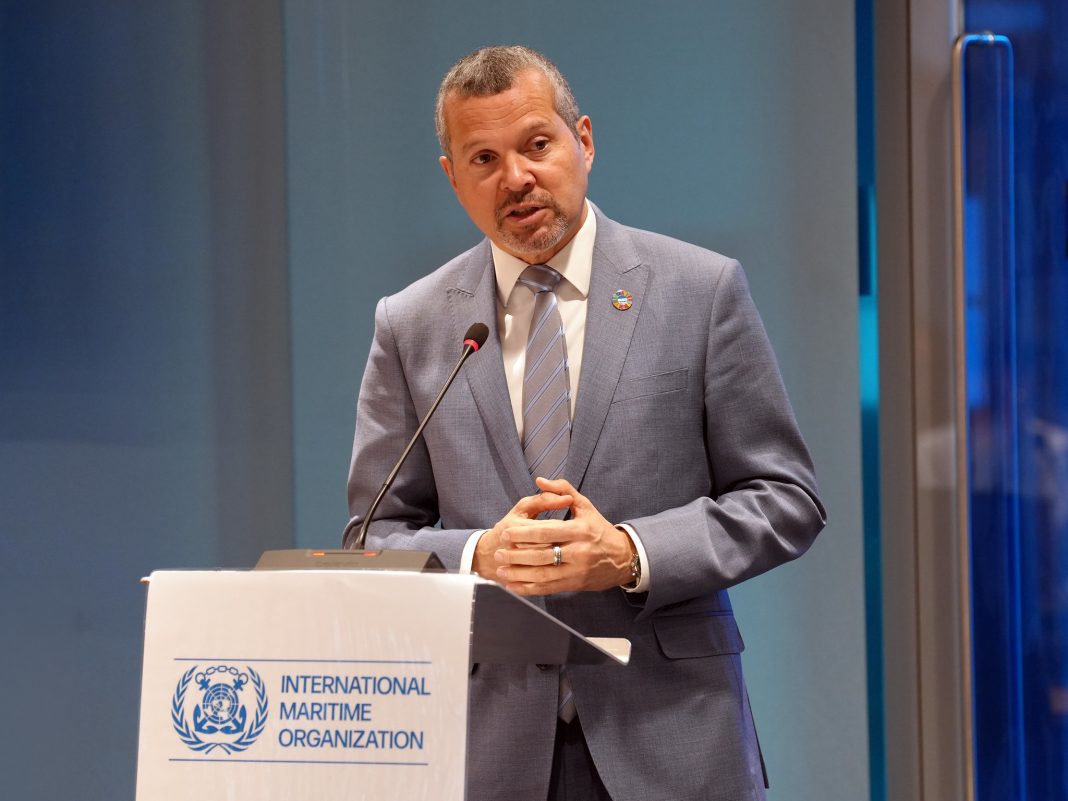
International Maritime Organization (IMO) Secretary-General Arsenio Dominguez has issued an urgent appeal to Member States and the global shipping industry to address the escalating humanitarian crisis in the Strait of Hormuz. During an informal briefing, the Secretary-General confirmed that approximately 20,000 seafarers across 1,600 vessels remain trapped in the region as the conflict enters its eighth week.
The Secretary-General reported that several vessels have been seized and detained in recent days. Since the onset of the conflict, the IMO has verified 29 attacks on merchant vessels in the Persian Gulf and the Strait of Hormuz, resulting in at least 10 fatalities and significant structural damage to ships.
“My call is to release the seafarers because they are not at fault,” stated Secretary-General Dominguez. “The situation is not improving. I reiterate there is no safe transit anywhere in the Strait of Hormuz.”
With vessels stuck for nearly two months, the IMO warned that essential supplies—including food, water, and fuel—are reaching critical lows. Beyond the physical scarcity, the Secretary-General highlighted the severe psychological impact on crews.
-
Mental Health: Seafarers report exhaustion and a sense of being “invisible” or undervalued.
-
Welfare: The IMO is calling for the fair treatment of all crew members, ensuring consistent wage payments and family communication.
-
Support Systems: Flag States and NGOs are urged to provide remote assistance and helplines for those currently detained or stranded.
The IMO is currently developing a comprehensive evacuation plan in coordination with international partners. Key components of the proposal include:
-
Humanitarian Prioritizing: Compiling a list of affected vessels to prioritize evacuation based on the urgency of crew needs.
-
Safety Guarantees: A requirement for all parties to the conflict to agree to a total cessation of attacks on maritime assets during the operation.
-
The TSS Corridor: Utilizing the internationally recognized Traffic Separation Scheme (TSS)—established by the IMO in 1968—as a dedicated evacuation corridor once safety guarantees are secured.
The Secretary-General expressed gratitude for the logistical support offered by France, the United Kingdom, and other nations. The IMO remains in active dialogue with Iran and Oman, who continue to coordinate transit operations within the corridor.
“There is much more we need to do,” Dominguez concluded, urging the international community to move swiftly to ensure the safety and dignity of the maritime workforce.

