


The Philippines is moving to impose structure and long-term direction on its fast-growing ube industry, as agriculture and trade officials push for tighter coordination, standardization, and export-ready systems to harness surging global demand for the once-humble purple yam.
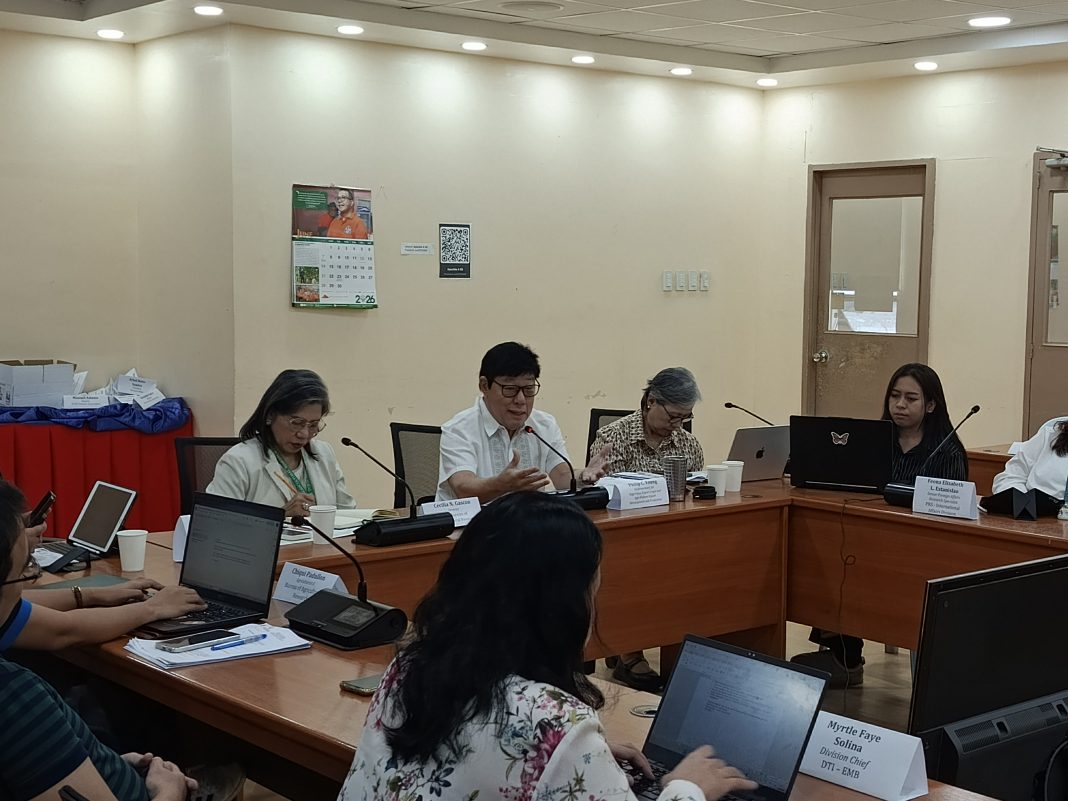
At a recent consultative meeting in Quezon City, the Department of Agriculture (DA) and the Department of Trade and Industry–Export Marketing Bureau (DTI-EMB) gathered 249 stakeholders from across the value chain, including farmers, processors, exporters, traders, and cooperatives. The discussion centered on a familiar tension in an increasingly high-profile commodity. Demand is accelerating, but supply systems and coordination remain uneven.
“Demand is booming but supply and structure are struggling to keep up,” said Agriculture Undersecretary Philip C. Young, who leads the High Value Export Crops program. “Ube is no longer just a pantry staple or dessert flavor but an export product that needs rules, scale, and a proper growth playbook,” he added.
At the center of the reform push is a proposal to establish a Steering Committee and Technical Working Group that would serve as the industry’s coordinating backbone. The body would function as both referee and architect, setting the rules while also shaping the system.
Its mandate includes defining the official scope of ube, standardizing raw and processed products, and harmonizing quality requirements across agencies and exporters. The goal is to eliminate inconsistencies that often slow shipments, weaken competitiveness, and discourage large-scale investment.
In practical terms, the government is attempting to convert what has effectively been a fast-moving but loosely organized “purple gold rush” into a disciplined, export-ready value chain.
The urgency is underscored by industry data showing that current production levels of around 50 to 60 metric tons per operator could scale up to as much as 500 metric tons with improved supply coordination and expanded raw material access. Demand, stakeholders stressed, is not the constraint. Supply reliability is.
Exporters reported persistent shortages of raw ube even as global appetite continues to rise for powder, halaya, jam, paste, and other value-added products that have turned ube into a breakout global food trend. Key markets already include Canada, the Middle East, and parts of Asia, while the United States, South Korea, and Europe are emerging as next-wave growth destinations.
Private sector players have signaled willingness to expand plantations and invest in capacity, but only if standards, rules, and supply systems become more predictable.
The TWG is also expected to align phytosanitary and technical standards across agencies, addressing long-standing regulatory fragmentation that has constrained agricultural exports.
The TWG shall be composed of Private Stakeholders jointly with various DA Offices and / attached agencies and other non DA Agencies / Offices.
Agriculture Secretary Francisco P. Tiu Laurel Jr. emphasized the broader economic stakes of the initiative, linking ube’s development to the country’s wider export strategy. “We need to develop more agricultural export winners that can raise farmers’ incomes and help reduce our farm trade deficit, which exceeds USD10 billion annually,” he said.
The statement reflects a broader policy shift toward export-driven agriculture, where select high-value commodities are developed into globally competitive industries rather than remaining fragmented domestic supply chains.
The approach mirrors earlier successes in mango and cacao, where structured coordination, clear standards, and stronger private sector alignment helped unlock export growth.
If implemented effectively, the ube roadmap could mark a turning point, elevating the crop from viral dessert staple to a fully structured export industry. If not, global demand may continue its upward climb while supply remains perpetually a step behind.

