


BANAUE, Ifugao —The Department of Agriculture (DA) is intensifying efforts to preserve the iconic Ifugao Rice Terraces as mounting climate pressures, aging infrastructure, and changing farm economics threaten one of the country’s most important agricultural heritage landscapes.
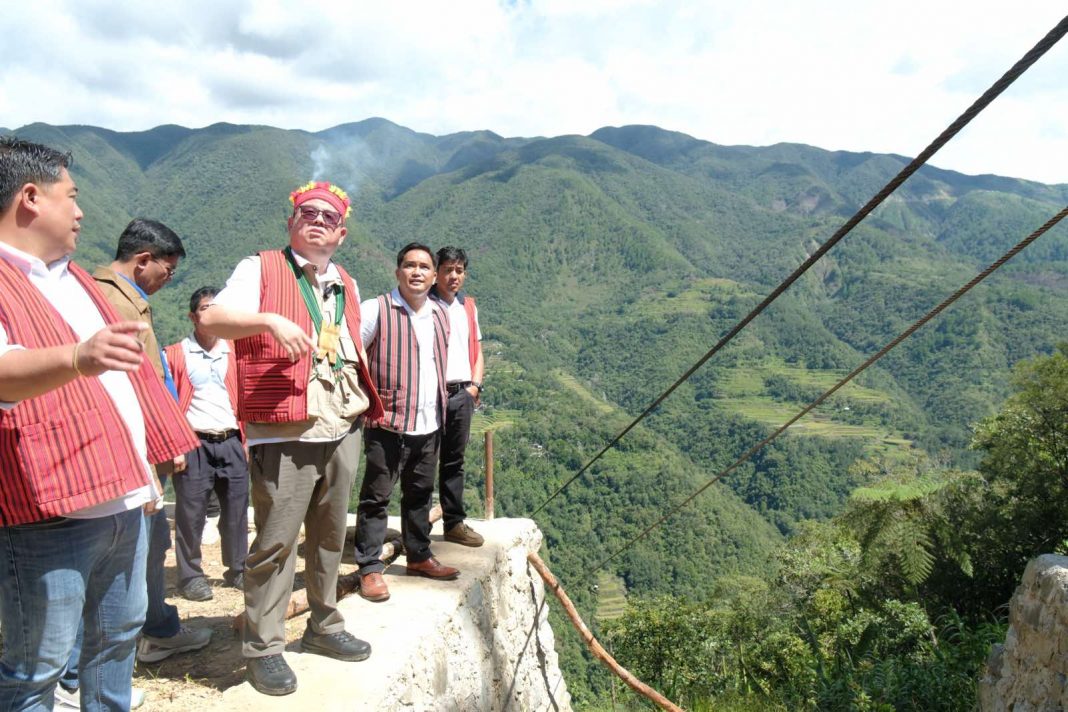
Agriculture Secretary Francisco P. Tiu Laurel Jr. visited Banaue on Friday to assess the condition of the rice terraces, inspect critical agricultural infrastructure, and consult with farmers and local officials on measures to strengthen productivity, climate resilience, and rural livelihoods.
The visit comes as the DA continues to channel substantial resources into Ifugao’s agriculture sector. The agency has allocated more than P218.8 million in 2026 to support rice, corn, high-value crops, livestock, climate adaptation, and farmer development programs. The programs will benefit over 400 farmers’ organizations and agricultural communities across the province.
Beyond the 2026 allocation, the Department has also invested heavily in rural infrastructure through the Philippine Rural Development Project (PRDP). Since the program’s implementation in Ifugao, PRDP has funded 10 major infrastructure projects worth over P2.025 billion, including seven farm-to-market roads valued at P1.903 billion, two potable water supply systems worth P112.2 million, and one communal irrigation system amounting to P9.76 million. These projects are designed to improve market access, reduce transport costs, strengthen water security, and increase farm productivity across the province’s agricultural communities. This is on top of the 18 completed infrastructure projects in Ifugao worth ₱810.55 million FMR and PWS projects.
In 2027, the DA has an endorsed proposal in the amount of ₱147 million for rice terrace restoration in the Cordillera, including ₱68 million (46%) for Ifugao, along with ₱30 million for the rehabilitation of two agricultural tramlines.
“The Ifugao Rice Terraces are more than a cultural treasure. They are a living agricultural system that supports food production, tourism, and rural livelihoods,” said Tiu Laurel. “Our goal is to ensure that preservation goes hand in hand with modernization by helping farmers become more productive, climate-resilient, and profitable while protecting a heritage that has sustained generations. Our heirloom rice presents a significant opportunity for export, and we are determined to position it as a premium Philippine product recognized worldwide.”
The centerpiece of the visit was the Batad Rice Terraces, part of the UNESCO-listed Rice Terraces of the Philippine Cordilleras and a major source of heirloom rice and agri-tourism income. While the terraces remain a global symbol of Filipino ingenuity, sections of the landscape are showing signs of strain from damaged stone walls, deteriorating irrigation systems, and increasingly unpredictable weather patterns.
Local stakeholders are seeking support for terrace rehabilitation, irrigation restoration, disaster mitigation measures, and expanded programs for heirloom rice conservation.
The challenge is complicated by UNESCO preservation requirements that limit the use of non-traditional materials in restoration work.
A growing concern is the gradual conversion of some terrace areas into highland vegetable farms.
At the Banaue Viewpoint terraces, local officials have recommended rehabilitation as farmers increasingly shift to vegetables due to water constraints and the prospect of higher incomes.
The trend highlights a broader economic reality. Preserving heritage agriculture will require making it financially viable for farming families who face rising production costs and changing market conditions.
Tiu Laurel also visited the 1.2-kilometer San Fernando–Lubu-ong tramline connecting farming communities in Banaue and Hungduan which was damaged, forcing farmers to rely on less efficient transport options.
He also inspected the 520-meter Viewpoint–Ki-iyang Tramline, a farm-to-market support facility completed by the Department of Agriculture in 2014. The tramline serves the farming communities of Barangay Viewpoint, Banaue, Ifugao, providing a vital transport link for agricultural inputs and farm produce from remote mountainous production areas to the nearest road network. During the visit, it was noted that the tramline has been subjected to continuous use and heavy loads, causing frequent wear and tearing of its cables. These recurring damages have resulted in repeated repairs and periodic service interruptions, highlighting the need for rehabilitation and upgrading to ensure the continued delivery of essential transport services for local farmers. He recommended upgrading the tramline based on a design he commissioned 2 years ago.
The two tramlines underscore the province’s enduring logistics challenge, emphasizing the importance of improving transport infrastructure to support agricultural productivity and market access.
The DA’s goal is not simply about preserving a world-renowned landscape. It is about ensuring that one of the country’s oldest farming systems remains economically relevant and productive in the decades ahead.

