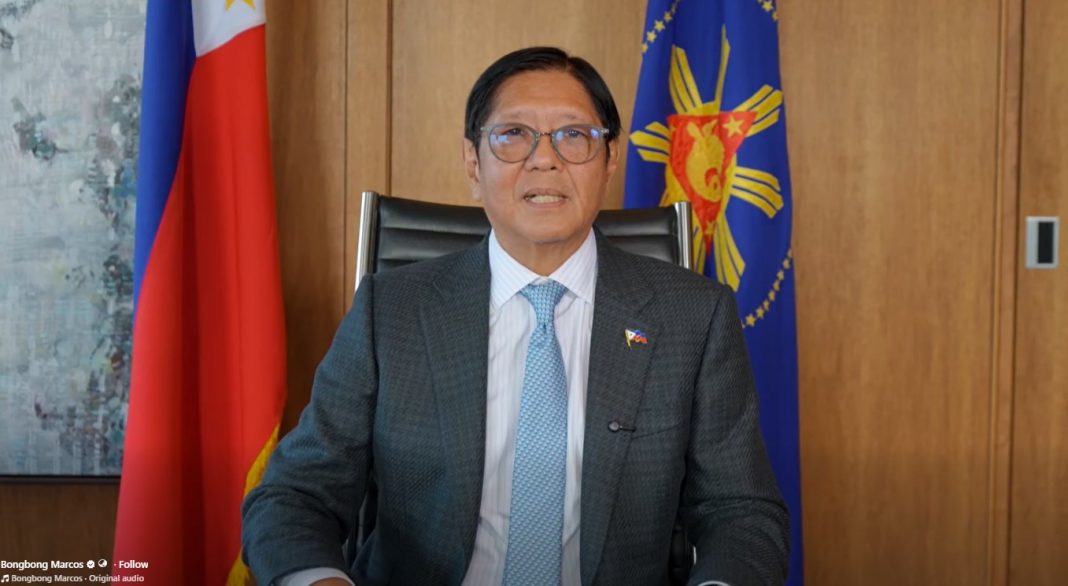
President Ferdinand R. Marcos Jr. officially welcomed the Philippines’ transition to an upper-middle-income country (UMIC) status on Thursday, calling the milestone a definitive affirmation of the government’s economic strategies and reforms over the past four years.
The official reclassification comes after the World Bank released its latest income assessment on Wednesday. According to the report, the Philippines achieved a Gross National Income (GNI) per capita of USD 4,850, successfully surpassing the World Bank’s current UMIC threshold of USD 4,636.
“After nearly four decades as a lower-middle-income country since 1987, this milestone affirms that the economic policies we have pursued over the past four years have been effective,” President Marcos said in a video message. “Our steady economic growth, broadly stable currency, and long-term reforms have strengthened our economy even amid global uncertainties. It validates the progress we have made and the resilience of the Filipino people.”
The Philippines moves into the upper-middle-income bracket alongside Jordan, Micronesia, Sri Lanka, and Vietnam.
According to the administration, achieving UMIC status serves as a major vote of confidence in the nation’s economic future. The new classification is expected to act as a catalyst for increased foreign and domestic investment, fueling business expansion and creating higher-quality employment opportunities across the country.
In a separate statement, the Department of Economy, Planning, and Development (DEPDev) attributed the milestone to sustained economic growth, sound macroeconomic management, and long-term structural reforms. DEPDev projected that the new status will strengthen the Philippines’ international credit profile, boost investor confidence, and unlock expanded access to favorable financing terms and high-value investments.
President Marcos also explicitly recognized the vital contribution of overseas Filipino workers (OFWs), whose remittances and earnings abroad form a significant component of the nation’s rising GNI.
While celebrating the economic milestone, both the President and DEPDev emphasized that macroeconomic success must translate into tangible improvements in the daily lives of citizens.
“Economic progress is not meant to stay on paper,” President Marcos stressed, noting that true advancement means opening doors, putting food on the table, and giving every Filipino the opportunity to build a better life.
DEPDev maintained a cautious outlook, stating that the upgrade does not eliminate ongoing domestic challenges. The department reiterated that the government’s primary focus remains on making this growth fully inclusive so that its benefits reach every Filipino family.
President Marcos closed with a pledge to maintain this economic momentum: “We will continue working until every family feels the benefits of our country’s progress.”