


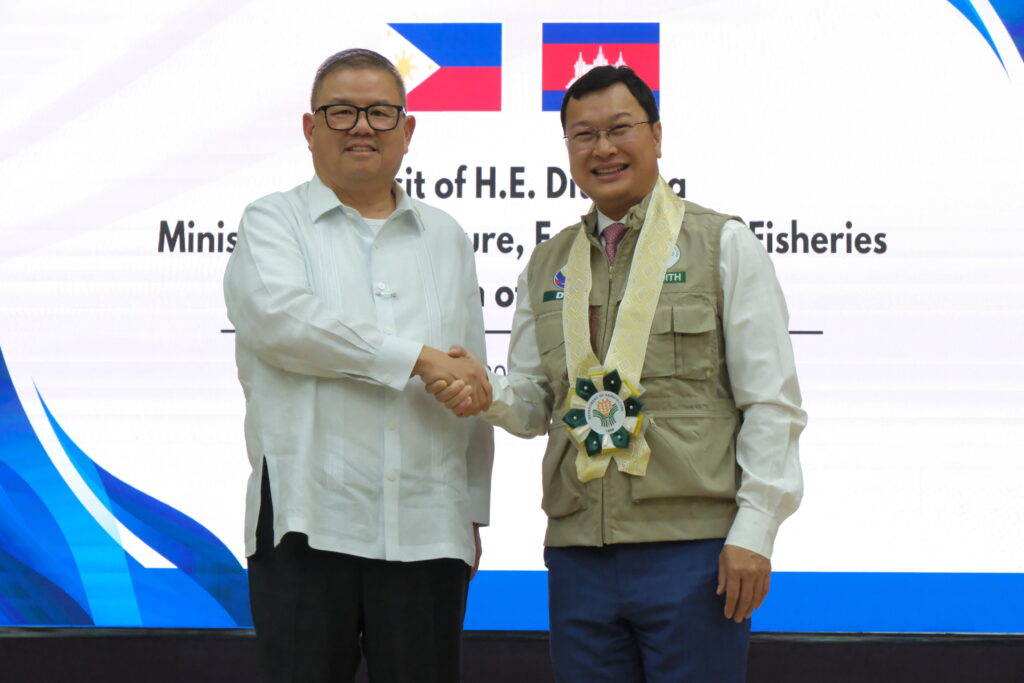
The Philippines and Cambodia are looking to turn stronger diplomatic ties into bigger business opportunities as the Southeast Asian neighbors push to expand agricultural trade, strengthen food security and unlock new investment prospects across the agri-fishery sector.
In welcoming Cambodian Agriculture, Forestry and Fisheries Minister Dith Tina and a business delegation to Manila on Tuesday, July 21, Agriculture Secretary Francisco P. Tiu Laurel Jr. said the visit signals a new phase in bilateral economic cooperation, with both governments seeking to deepen collaboration in agriculture, fisheries and related industries.
“Your visit reflects the deepening strength of our bilateral relationship and our shared commitment to advancing cooperation in agriculture, fisheries, and broader economic development,” Tiu Laurel said.
While agricultural trade between the two countries reached USD15.9 million in 2025, the figure also underscores the untapped potential for stronger commercial ties. The Department of Agriculture sees ample opportunities to expand trade, encourage private sector partnerships and promote greater investment across the agri-fishery value chain.
Tiu Laurel also noted the positive momentum in bilateral trade this year, expressing optimism that the Cambodian mission would pave the way for new commercial agreements and long-term business partnerships.
“In 2026, there is significant growth in trade between the Philippines and Cambodia, and we’re looking forward to continuing that trajectory. Hopefully something good and more deals will come out of this mission,” he said.
The discussions come as the Philippines accelerates efforts to modernize agriculture through climate-resilient farming, stronger biosecurity, digital technologies and upgraded value chains. Cambodia, meanwhile, continues to strengthen its agricultural sector, creating new opportunities for collaboration, technology exchange and private investment.
The visit also reflects a broader ASEAN trend of deepening intra-regional trade as member states work to reduce supply chain risks and build a more resilient regional food system amid global economic uncertainties.
Rather than relying heavily on distant markets, Southeast Asian economies are increasingly looking within the region to strengthen economic cooperation and create more integrated agricultural supply chains.
“At the end of the day, we cannot afford to do it alone. The Philippines needs its ASEAN brothers to work closely for the common good and a common food-secure ASEAN,” Tiu Laurel said.
If translated into concrete business agreements, the mission could expand trade, generate new opportunities for farmers, agribusinesses and investors, and reinforce ASEAN’s role as a more integrated, resilient and competitive agricultural region.

