


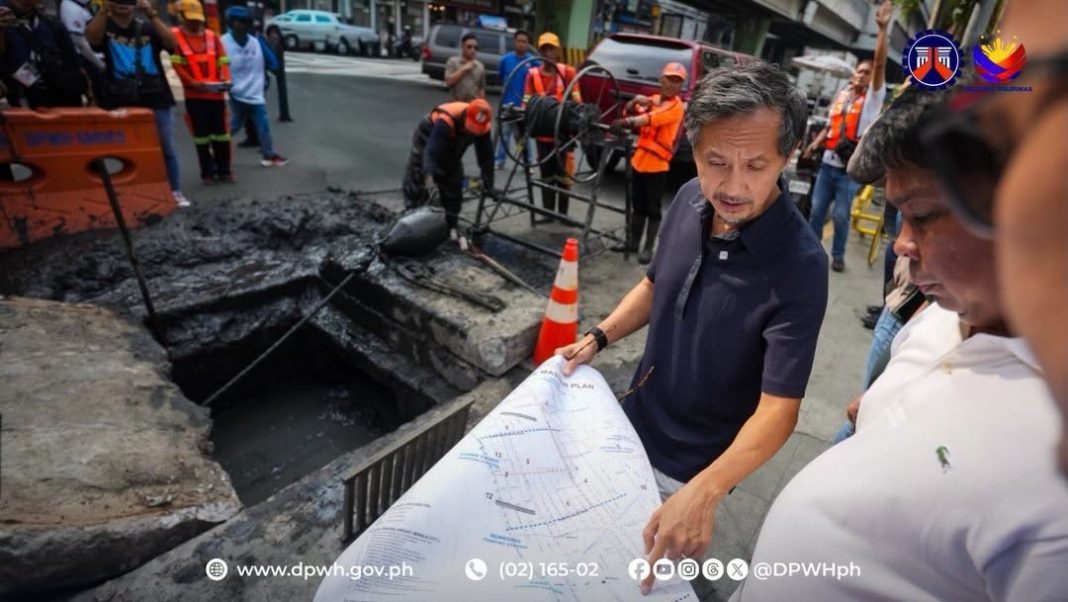
Relief is finally in sight for thousands of students, commuters, and motorists who regularly navigate the flood-prone stretches of Taft Avenue. Following direct instructions from President Ferdinand R. Marcos Jr. to prioritize high-capacity drainage systems across Metro Manila’s flood hotspots, the national government has slated key upgrades along the busy thoroughfare for full funding in 2027.
Department of Public Works and Highways (DPWH) Secretary Vince Dizon confirmed that the upcoming phase of the drainage improvement project will focus on the old infrastructure directly opposite De La Salle University (DLSU) in Malate. The aging underground system, which has struggled for decades to handle volume during intense monsoon rains and typhoons, will be completely replaced with modern, high-volume culverts designed to clear floodwaters rapidly.
“For decades, even a brief heavy downpour has meant stranded commuters, suspended classes, and gridlocked traffic along Taft Avenue,” Secretary Dizon noted. “Under President Marcos’ direction, we are moving away from piecemeal repairs and investing in high-capacity infrastructure to ensure water recedes within minutes, not hours.”
Key highlights of the project:
-
High-Capacity System: Replacement of outdated subterranean pipes with larger, modern concrete drainage networks.
-
Targeted Operations: Priority work focused on the critical, heavily inundated zone along Taft Avenue opposite DLSU, Malate.
-
Commuter Relief: Designed to protect tens of thousands of daily commuters, university students, and light rail transit (LRT-1) passengers from severe weather disruption.
-
Funding Approval: Fully integrated into the 2027 infrastructure expenditure program.
Once completed, the project is expected to drastically mitigate water accumulation, protecting local businesses, ensuring continuous public transport flow, and putting an end to one of the capital’s most persistent urban challenges.
Detailed engineering designs and traffic management schemes will be finalized ahead of the 2027 rollout to minimize daily transit disruptions during construction.

