


Amidst shifting global dynamics and evolving energy needs in the Middle East, the Philippines is accelerating its transition toward offshore wind (OSW) energy as a cornerstone of national security and economic resilience.
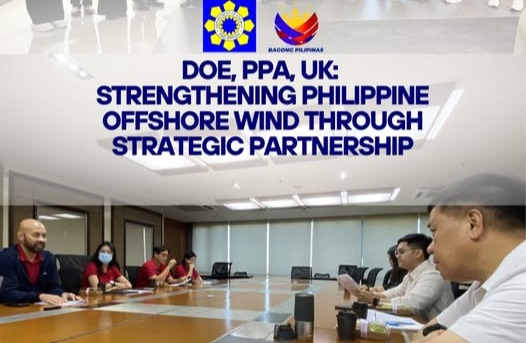
In a high-level coordination meeting, the Department of Energy (DOE), the Philippine Ports Authority (PPA), and the British Embassy Manila reaffirmed their commitment to transforming years of inter-agency planning into a commercially viable, bankable ecosystem for offshore wind development.
Offshore wind is emerging as more than just a renewable energy source; it is a strategic necessity. By providing clean, reliable, and domestically sourced power, OSW reduces the nation’s reliance on external energy markets and provides a stable foundation for the Filipino community’s long-term growth.
“We value the United Kingdom’s continued partnership as we align with international best practices,” stated Undersecretary Giovanni Bacordo of the DOE. “Through this sustained collaboration, we are strengthening a resilient, future-ready, and investment-driven energy sector that will anchor the Philippines for decades to come.”
The initiative brings together top-tier technical expertise and regulatory oversight to streamline the path to commercialization:
-
Department of Energy (DOE): Led by Usec. Giovanni Bacordo, focusing on the policy framework and “bankability” of the OSW sector.
-
Philippine Ports Authority (PPA): Led by Assistant General Manager Mark John Palomar, ensuring port infrastructure is ready to support the logistical demands of large-scale wind turbines.
-
The United Kingdom Government: Represented by David Francisco, providing strategic support and fostering international investment.
-
UK PACT (Partnering for Accelerated Climate Transitions): Represented by Juan Daray, continuing to offer technical assistance and capacity building to ensure the project meets global standards.
This collaboration marks a critical shift from theoretical planning to physical implementation. By integrating the UK’s global leadership in offshore wind with Philippine maritime and energy strategy, the partnership aims to create a “future-proof” energy grid.
The move is expected to attract significant foreign direct investment, create high-skilled local jobs, and ensure that the Philippines remains a competitive leader in the Southeast Asian green energy transition.

