


To mark the International Day for Women in Maritime, the International Maritime Organization (IMO) and the World Maritime University (WMU) have launched a landmark publication designed to dismantle systemic barriers and drive definitive action toward gender equality in the global shipping sector.
The Handbook on Gender Mainstreaming in the Maritime Sector is the first comprehensive guide of its kind. It addresses a stark reality: women currently represent just 1% of the global seafaring workforce and occupy only 19% of ministerial roles responsible for maritime affairs.
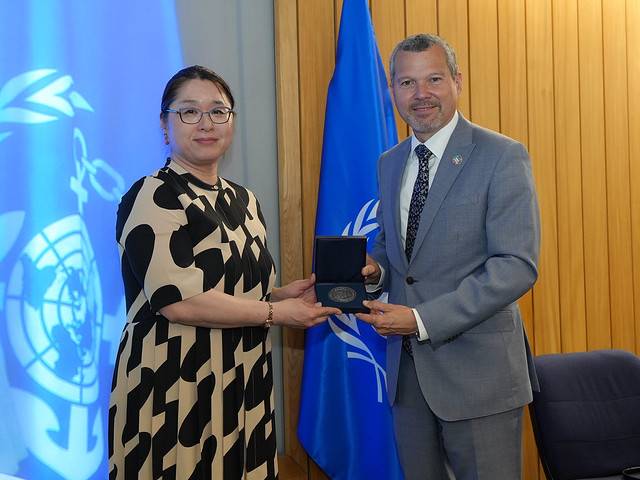
Authored by WMU Professor Momoko Kitada—who was also honored as the recipient of the prestigious 2026 IMO Gender Equality Award—the handbook moves past conceptual discussions to provide actionable, step-by-step guidance for maritime administrations, shipping companies, ports, shipyards, and training institutions worldwide.
The handbook delivers tailored tools to help organizations seamlessly integrate gender considerations into core operational areas, including policy development, recruitment practices, specialized training, workplace safety, and leadership advancement. It provides structured frameworks for conducting gender analysis, designing targeted equality action plans, and implementing robust monitoring and evaluation systems.
In the handbook’s foreword, IMO Secretary-General Arsenio Dominguez stressed that the future viability of the shipping industry hinges on immediate change, calling on stakeholders to move “beyond rhetoric and toward measurable action.”
“Gender mainstreaming is the strategic tool we must employ to bridge this gap,” said Secretary-General Dominguez. “It is not a secondary objective or a ‘women’s issue’; it is a globally recognized methodology used to ensure that every policy, every regulation, and every operational practice is scrutinized through a gender lens. A more diverse maritime workforce is more competent, safer, and more sustainable.”
Echoing this sentiment, WMU President Maximo Q. Mejia, Jr., highlighted in the preface that the handbook serves as a “roadmap to definitive change,” enabling maritime bodies to foster genuinely equitable work environments. Highlighting the tangible success of institutional commitment, President Mejia noted that WMU achieved full gender parity in its Malmö MSc intake for 2025 following decades of targeted strategies to expand opportunities for women in higher maritime education.
Speaking at the launch, Professor Kitada emphasized that true inclusivity benefits the entire maritime ecosystem and relies on active involvement across all corporate tiers.
“Gender mainstreaming is an effective strategy, process, and methodology that works for everyone’s benefit,” Professor Kitada stated. “Gender mainstreaming requires leadership to implement. No matter our role or level in an organization, we can exercise gender mainstreaming in both large and small capacities.”
The Handbook on Gender Mainstreaming in the Maritime Sector is now available to maritime stakeholders worldwide to support the industry’s collective transition toward a more diverse, equitable, and sustainable future.

